
























Settle Plate Placement in Cleanroom: Why Location Decides Everything
Picture an aseptic cleanroom on a good day. The HEPA filters are performing efficiently, differential pressures are within limits, and every surface looks spotless. Then a microbiologist walks in with a few settle plates, and a deceptively simple question follows: where should they go?
Near the door? Under a HEPA filter? Beside the filling line? The answer to settle plate placement in a cleanroom is straightforward: place them where the risk is highest, not where there is simply empty space.
What Is a Settle Plate and Why Does Placement Matter?
A settle plate is more than an agar plate. It is a passive air monitoring tool that captures viable microorganisms settling from the air during operations. Because it only records what settles on it, a settle plate is only as informative as the position it occupies. A plate placed for convenience may produce a clean result that says very little about the conditions around your product. A plate placed at a high-risk location produces data that can actually protect it.
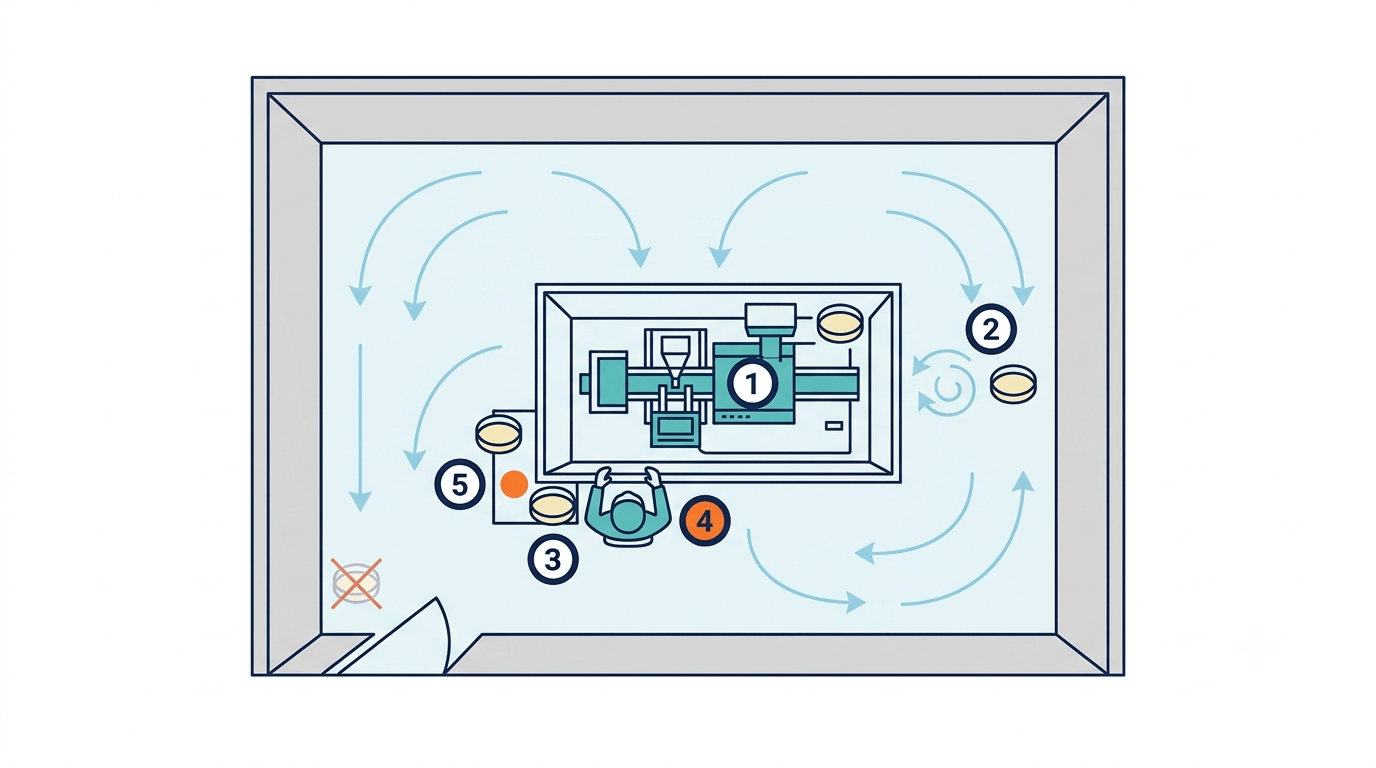
Why Settle Plate Locations Follow a Quality Risk Management (QRM) Approach
Settle plate locations are selected using a Quality Risk Management (QRM) approach rather than convenience. A scientifically justified monitoring plan weighs five factors.
1. Critical Processing Zones
Prioritise areas where sterile products, containers, or components are exposed. These are the locations where a contamination event would matter most.
2. Personnel Interventions
Operators are the primary source of viable contamination in cleanrooms. Locations affected by operator presence, movement, and interventions deserve close attention when planning where plates go.
3. Airflow Dynamics
Airflow should be evaluated through smoke studies. These studies help identify turbulence, airflow disruption, or areas where microorganisms are more likely to settle, which is exactly the behaviour a settle plate is designed to detect.
4. Equipment Layout
Filling machines, RABS, isolators, and transfer points can all influence airflow and contamination risk. The physical layout of equipment should shape where monitoring is placed.
5. Historical Environmental Monitoring (EM) Data
Historical EM data helps identify recurring hotspots. Reviewing it allows the monitoring program to improve continuously rather than repeat the same sampling pattern indefinitely.
What Do the Guidelines Say About Monitoring Locations?
This risk-based approach is supported by PDA Technical Report No. 13, USP <1116>, and EU GMP Annex 1 (2022). Each recommends selecting monitoring locations based on process knowledge, airflow behaviour, personnel movement, and contamination risk rather than routine or convenience.
- EU GMP Annex 1 (2022): Risk assessments are used to establish the environmental monitoring program, including sampling locations, and should be based on detailed knowledge such as routine and qualification monitoring data. The locations posing the highest contamination risk to sterile equipment surfaces, containers, closures, and product are the ones to monitor, and the positioning of sampling devices should be justified.
- PDA Technical Report No. 13: Calls for a documented risk assessment when selecting sample sites, and has a dedicated section on EM sample site selection using risk management principles.
- USP <1116>: Lists factors to consider when choosing sample sites, such as proximity to exposed product, containers, and closures, high-traffic areas, the impact of interventions, and sites that are difficult to clean.
Read More: Environmental Monitoring Trending in Pharmaceutical Manufacturing
The Takeaway: A Settle Plate Is Only as Valuable as Where It Is Placed
The real science of environmental monitoring is not simply collecting samples. It is understanding where contamination is most likely to occur and generating meaningful data that strengthens contamination control, supports aseptic process assurance, and ultimately protects patient safety.
Frequently Asked Questions
Where should settle plates be placed in a cleanroom?
Settle plates should be placed where contamination risk is highest, such as near exposed sterile products, containers, or components, and near personnel interventions, rather than wherever space is available.
Why is a risk-based approach used to select settle plate locations?
A Quality Risk Management approach ensures locations are scientifically justified using critical zones, personnel activity, airflow behaviour, equipment layout, and historical EM data, so the data generated is meaningful.
What role do smoke studies play in settle plate placement?
Smoke studies visualise airflow and help identify turbulence, disruption, or areas where microorganisms are more likely to settle, which informs where plates can provide the most useful information.
Which guidelines support risk-based settle plate placement?
PDA Technical Report No. 13, USP <1116>, and EU GMP Annex 1 (2022) all recommend selecting monitoring locations based on process knowledge, airflow behaviour, personnel movement, and contamination risk.
How does historical EM data improve settle plate locations?
Historical data highlights recurring hotspots, allowing the monitoring program to be refined over time instead of staying static.
Strengthen Your Environmental Monitoring Program
At Prewel Labs, we help pharmaceutical manufacturers optimise Environmental Monitoring programs through scientific, risk-based solutions that support regulatory compliance and contamination control.