




















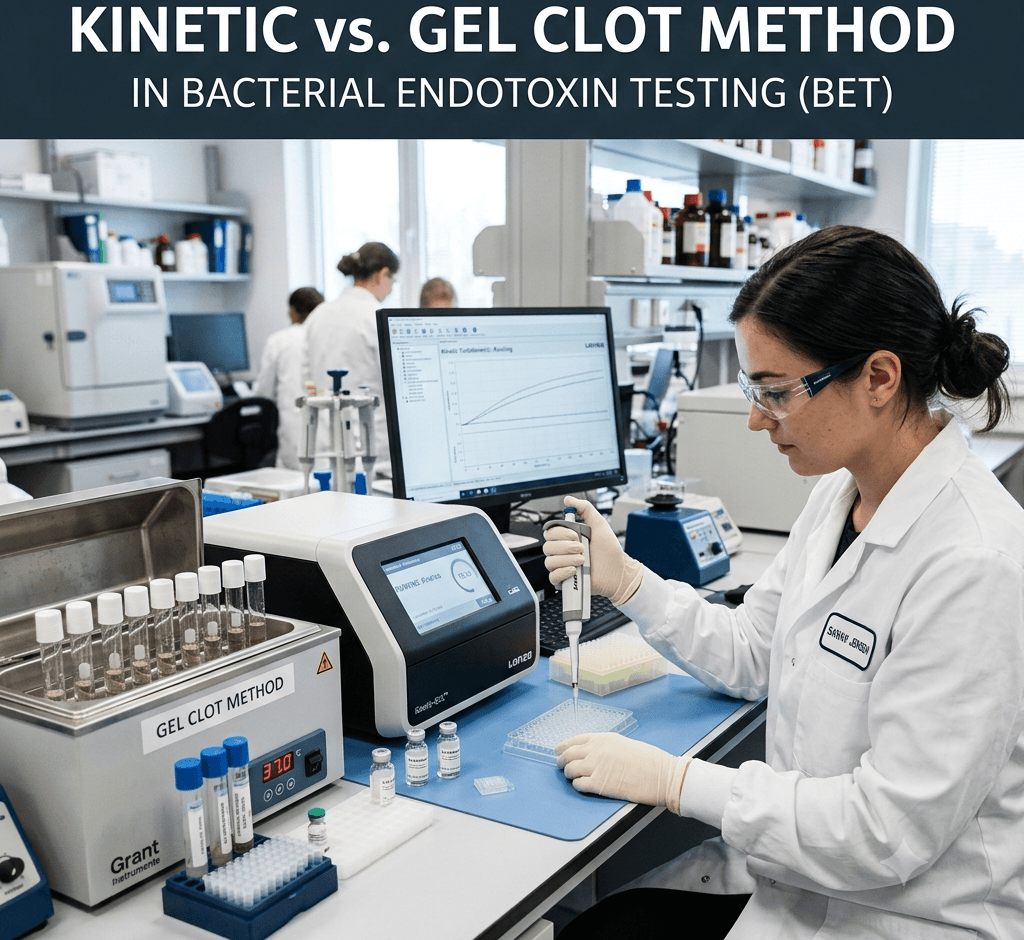
Kinetic vs Gel Clot Method in BET Testing: Which One Do You Need?
If you work in the pharmaceutical or medical device industry, you’ve probably heard someone say, “We’ve done BET testing.” It sounds straightforward until you ask how it was done.
Was it the Gel Clot method or the Kinetic method? And does it actually matter which one was used?
It does. The method you choose affects the kind of result you get, how fast you get it, and whether it holds up under regulatory scrutiny. Here’s a complete breakdown of both methods, how they work, and how to decide which one is right for your product.
What Is BET (Bacterial Endotoxin Test)?
BET stands for Bacterial Endotoxin Test. It checks whether a product contains endotoxins compounds shed by Gram-negative bacteria that can trigger fever, inflammation, and in severe cases, septic shock, even when no live bacteria remain in the product.
That’s why endotoxin testing is a standard part of quality control for injectables, biologics, sterile ophthalmics, implantables, active pharmaceutical ingredients, and water systems used in manufacturing not just finished parenteral drugs.
Endotoxin detection relies on LAL (Limulus Amebocyte Lysate), a reagent derived from the blood cells of the horseshoe crab. When LAL comes into contact with endotoxin, it reacts and that reaction is the basis for every BET method in use today, including both the Kinetic and Gel Clot approaches.
The Kinetic Method: Quantitative and Fast
The Kinetic method measures the LAL-endotoxin reaction continuously, using an instrument that tracks the change whether that’s cloudiness or color over time rather than at a single endpoint. Because it monitors the reaction as it develops, it can calculate the actual endotoxin concentration in a sample, expressed in EU/mL (e.g., 0.045 EU/mL or 0.5 EU/mL).
This makes Kinetic a quantitative method it doesn’t just tell you pass or fail, it tells you exactly how much endotoxin is present.
Advantages of the Kinetic method:
- Precise, numeric results rather than a simple pass/fail outcome
- Fast turnaround chromogenic kinetic instruments, such as the Endosafe-PTS system, can deliver results in about 15 minutes
- Automated instruments running on validated software with audit trails can support 21 CFR Part 11–compliant electronic record-keeping
- Results can be printed out and used as documented evidence for batch release or regulatory submissions
Limitation: Because it relies on precise optical measurement, the Kinetic method is more sensitive to interfering substances in the sample matrix (such as pH extremes, certain excipients, or viscous formulations), which can distort readings if not properly validated against interference.
Two Types of Kinetic Testing
The Kinetic method isn’t a single technique it comes in two forms, both recognized under USP <85>:
- Kinetic Turbidimetric measures the increase in cloudiness (turbidity) as the reaction progresses. This typically takes a minimum of 1–2 hours to produce a result.
- Kinetic Chromogenic measures the color change produced when the LAL reagent cleaves a synthetic substrate. Using instruments like the Endosafe-PTS, this can deliver a result in as little as 15 minutes.
The Kinetic method is generally the right choice when regulatory limits are strict and you need to report an actual, defensible endotoxin value rather than a simple limit-based result.
Read More: MAT vs BET
The Gel Clot Method: Simple and Qualitative
The Gel Clot method is the oldest and most straightforward LAL-based technique. The sample is mixed with LAL reagent and incubated. If endotoxin is present above the reagent’s labeled sensitivity threshold, the LAL clots into a firm gel. If you invert the tube and the gel holds together, that’s a positive result; if it doesn’t form or breaks apart, it’s negative.
Because it only tells you whether endotoxin is present above a defined threshold not how much it’s a qualitative method.
Advantages of the Gel Clot method:
- Simple to perform and easy to interpret visually
- No specialized instrumentation required
- Less susceptible to interference from the sample matrix compared to instrument-based methods
- Results are typically available in around 1.5 hours
Limitation: The Gel Clot method, as traditionally performed with manual visual read and paper documentation, does not generate the kind of continuous electronic data trail required for 21 CFR Part 11 compliance.
Notably, under USP <85>, the Gel Clot Limit Test is designated as the referee method meaning it’s the method regulators and pharmacopeias fall back on to resolve disputes between test results, when a monograph doesn’t specify otherwise.
The Gel Clot method is well suited to limit testing or screening, particularly for low-risk products or routine monitoring where a numeric endotoxin value isn’t required.
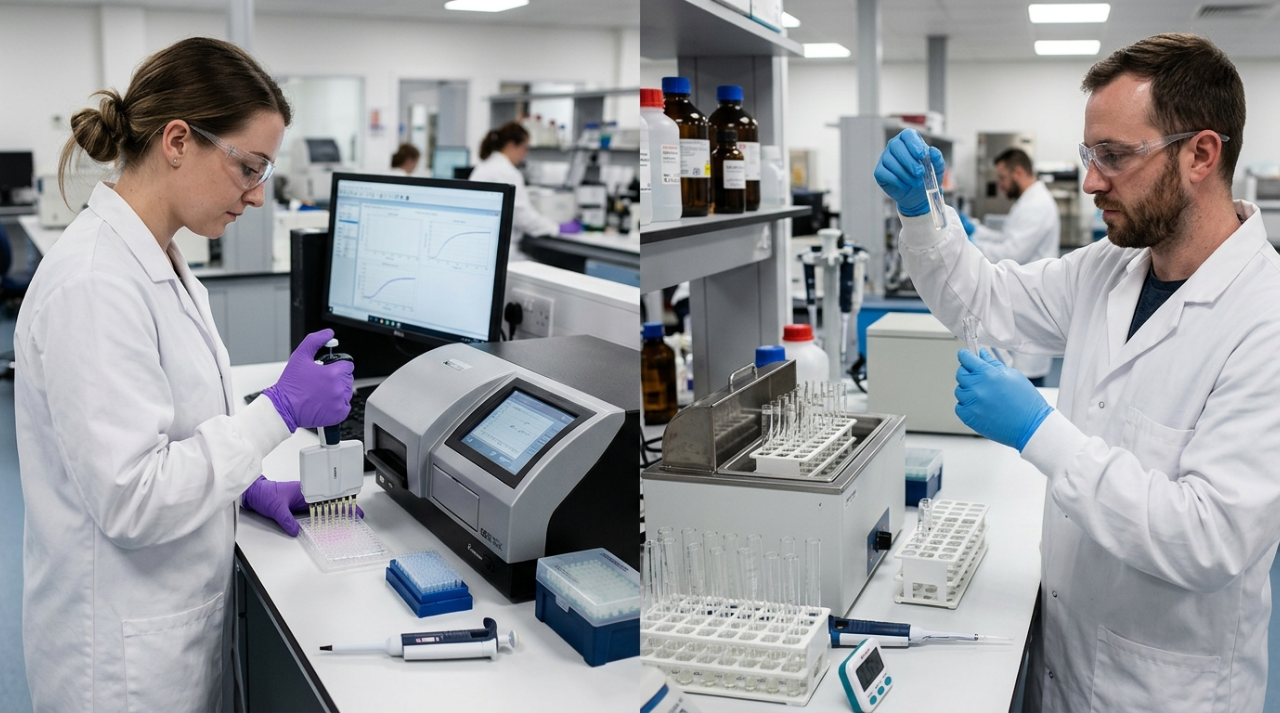
Kinetic vs Gel Clot: Which Should You Use?
The decision usually comes down to what kind of answer you need:
- Need a simple pass/fail against a defined limit? Use the Gel Clot method.
- Need an exact endotoxin concentration, fast turnaround, or an electronic, auditable record? Use the Kinetic method (turbidimetric or chromogenic).
Both methods are compendial and validated approaches under USP <85> the right one depends on your product’s risk profile, regulatory requirements, and how the result will be used (routine release testing vs. investigational or borderline results, for example).
Why the Method You Choose Matters
BET isn’t a compliance checkbox it’s a direct safeguard against a product causing fever, inflammatory reactions, or shock in a patient. Choosing the appropriate method, and understanding why it fits your product, is part of building a testing program that actually protects patients rather than just satisfying an audit trail.
At Prewel Labs, both Gel Clot and Kinetic methods are used depending on what a given product and its regulatory pathway require.
The takeaway: Don’t just “tick the BET box.” Understand what each method measures, how it’s validated, and pick the one that matches your product’s risk and reporting needs.
FAQ: Kinetic vs. Gel Clot BET Testing
Is the Kinetic or Gel Clot method more accurate? Kinetic methods provide a precise numeric endotoxin value, while Gel Clot gives a pass/fail result against a set threshold. Gel Clot is less prone to matrix interference, which is why USP <85> designates it as the referee method in the event of a dispute.
How long does each BET method take? Gel Clot typically takes around 1.5 hours. Kinetic Turbidimetric takes a minimum of 1–2 hours. Kinetic Chromogenic, run on instruments like the Endosafe-PTS, can produce results in about 15 minutes.
Is the Gel Clot method 21 CFR Part 11 compliant? Traditional Gel Clot testing relies on manual visual reading and is not inherently set up for the electronic audit trails required under 21 CFR Part 11. Automated Kinetic systems running validated software can support Part 11–compliant electronic records.
What is LAL in BET testing? LAL stands for Limulus Amebocyte Lysate, a reagent derived from horseshoe crab blood cells that reacts in the presence of bacterial endotoxin. It’s the basis for both the Gel Clot and Kinetic BET methods.