





















Hydrogen Peroxide vs Formaldehyde Fumigation in Cleanrooms: Why Pharma Is Making the Switch
For years, many pharmaceutical facilities treated formaldehyde as the “perfect” fumigant. It was cheap, it killed microbes, and it appeared to do the job. But is a fumigant that works on microbes really perfect if it creates new problems for people, surfaces, and compliance?
When you compare hydrogen peroxide (H₂O₂) and formaldehyde (CH₂O) for cleanroom fumigation, the picture changes quickly. This article walks through the health risk, the residue problem, the regulatory direction, and what to do about it.
What Is Cleanroom Fumigation, and Why Does the Choice of Agent Matter?
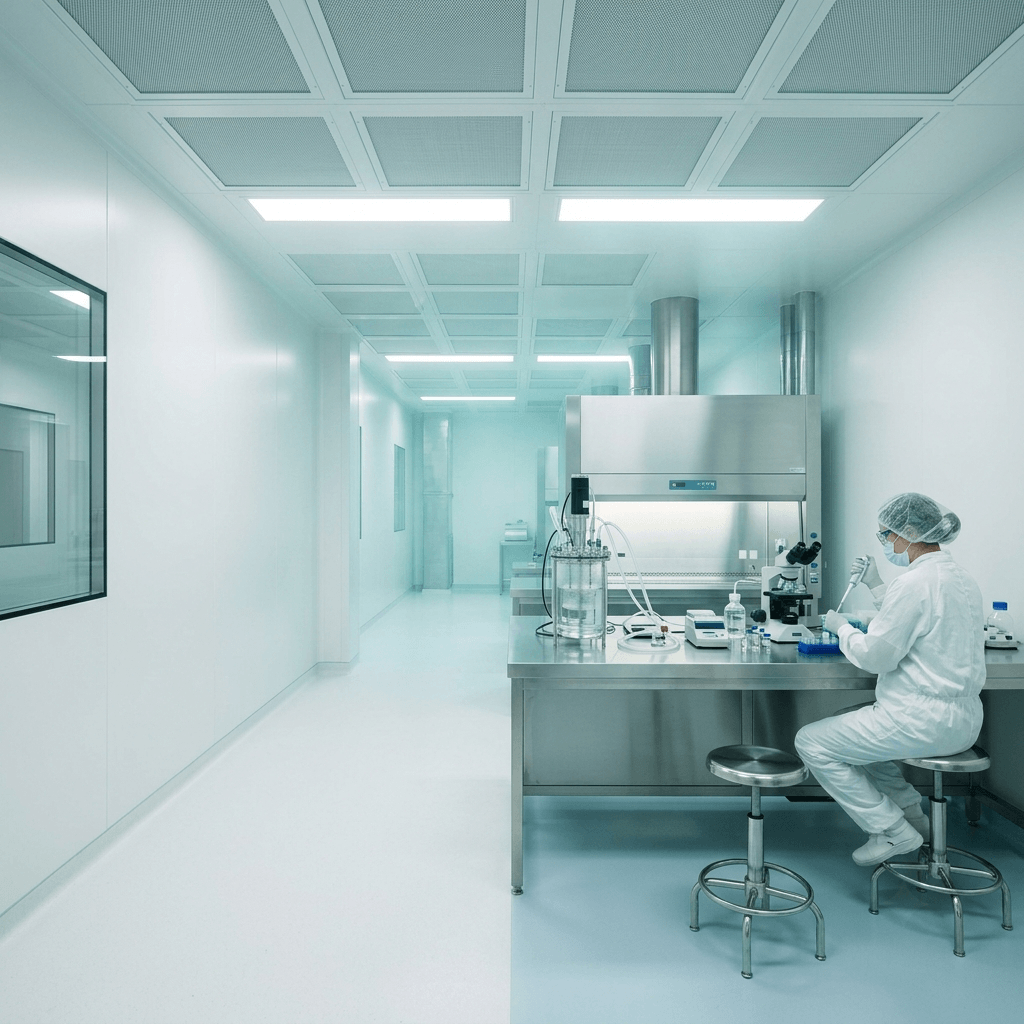
Fumigation is a gaseous or vapor-phase decontamination step used to reduce microbial contamination on room surfaces and equipment in controlled environments. The agent you choose affects more than microbial kill. It determines operator safety, how long the room is out of service, what is left behind on surfaces, and how your facility looks to an auditor.
Formaldehyde became a common choice largely because it is inexpensive and has a long history of use. The question today is whether that history justifies the trade-offs.
Formaldehyde Is a Group 1 Carcinogen
Imagine keeping a cleaning chemical in your kitchen that could increase cancer risk just by being around it. You would not. Yet that is the profile of formaldehyde.
The International Agency for Research on Cancer (IARC) classifies formaldehyde as a Group 1 carcinogen, meaning there is sufficient evidence that it causes cancer in humans. That means long-term exposure can raise cancer risk. Even short-term exposure irritates the eyes, nose, and throat.
For cleanroom teams who handle fumigation cycles repeatedly, this is not a theoretical concern. It is an occupational exposure issue that has to be managed on every cycle.
The Residue Problem: What Formaldehyde Leaves Behind
After fumigation, formaldehyde does not simply disappear. It can leave sticky residues on walls, equipment, and cleanroom surfaces. Removing them is not easy. Facilities typically need neutralizing agents and extended aeration before the space can be used again.
Think about cleaning your home with a chemical that leaves a harmful film on the dining table. Would you serve food there? A pharma cleanroom that relies on formaldehyde runs a version of that risk, because residues sit on the very surfaces that product and people touch.
Hydrogen peroxide takes a different path. It breaks down into water and oxygen, so vapor-phase and aerosolized H₂O₂ systems are widely described as leaving no harmful residue and aerating relatively quickly. That shortens downtime and reduces the cleanup burden.
Compliance: Regulators Are Moving Away from Formaldehyde
Regulatory expectations for sterile manufacturing, including frameworks such as WHO TRS 961 Annex 6 and EU GMP Annex 1, center on strong contamination control and on qualified, validated disinfection practices. Across the industry, the direction of travel is clear: away from formaldehyde and toward safer, faster, cleaner methods such as hydrogen peroxide vapor or chlorine dioxide.
Industry guidance on alternatives to formaldehyde fogging lists chlorine dioxide, vapor-phase hydrogen peroxide, and atomized peroxyacetic acid–hydrogen peroxide as the main replacement options. It also notes that whichever agent you choose, a new sanitizer has to be qualified for your aseptic areas.
The practical takeaway: relying on formaldehyde today means carrying health risk and regulatory risk at the same time.
Hydrogen Peroxide vs Formaldehyde: Quick Comparison
| Factor | Formaldehyde (CH₂O) | Hydrogen peroxide (H₂O₂) |
|---|---|---|
| Health classification | IARC Group 1 carcinogen | Skin and eye irritant; handled with controls |
| Residue | Sticky residues; needs neutralization and extensive cleaning | Breaks down to water and oxygen; no harmful residue |
| Aeration / downtime | Extended | Relatively rapid |
| Cost | Cheap | Requires generators or dedicated systems |
| Regulatory direction | Being phased away from | Preferred in modern practice |
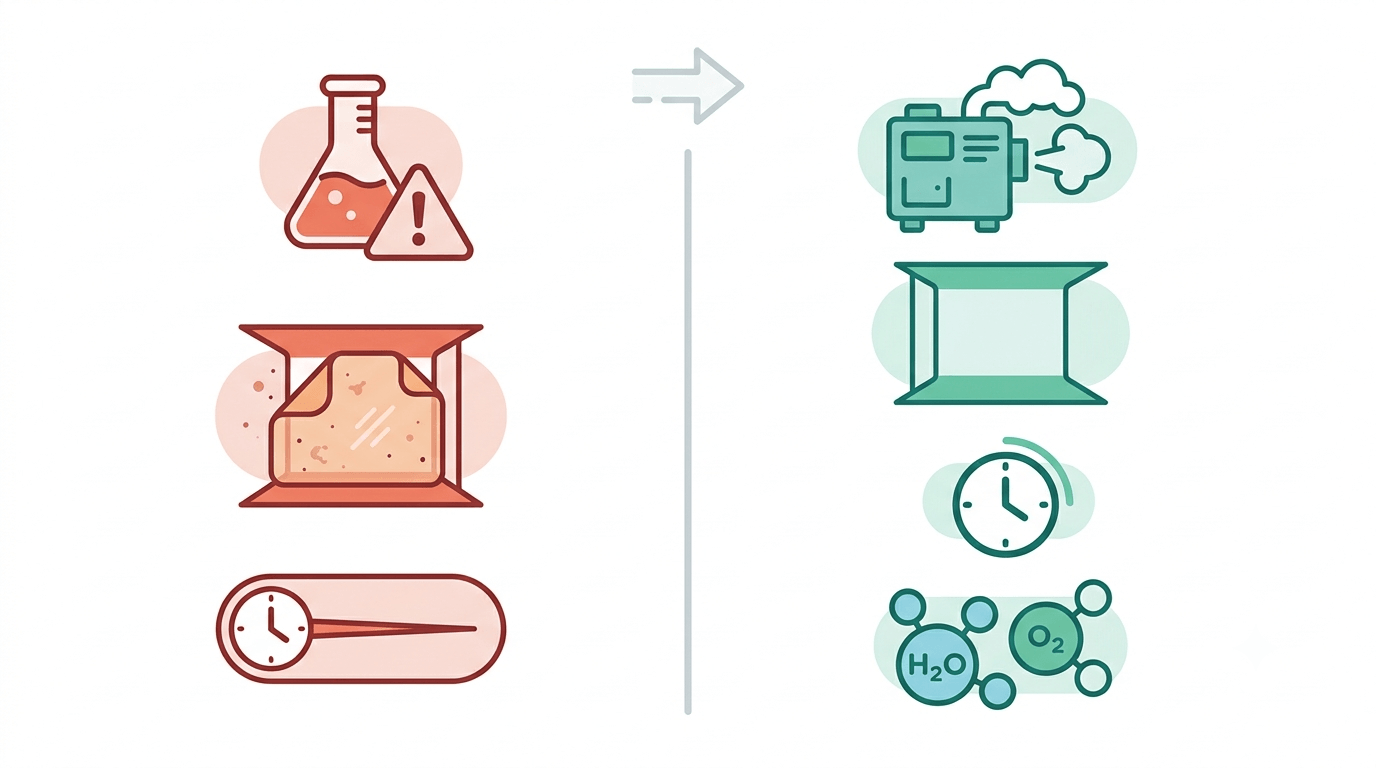
Hydrogen peroxide is not free of trade-offs. It needs dedicated equipment, and material compatibility (some metals and plastics can corrode) must be assessed. That is exactly why proof of performance in your own facility matters.
Read More: Disinfectant Efficacy Testing in Hospitals
Why Disinfectant Efficacy Testing (DET) Is the Missing Step
Choosing a better fumigant is only half the job. It is not enough to simply use a disinfectant. You need to prove it works in your own facility, on your own surfaces, against your own microbial load.
This is where Disinfectant Efficacy Testing (DET) comes in. DET for fumigation agents and disinfectants used in cleanrooms helps you demonstrate that your program is:
- Compliant: backed by documented evidence an auditor can review
- Effective: shown to work on your actual surfaces and your actual microbial flora
- Safe: supporting the move away from outdated, hazardous practices
At Prewel Labs, we emphasize DET as the way to move from formaldehyde fumigation toward disinfectants that regulators trust and your cleanrooms genuinely need.
Frequently Asked Questions
Why is formaldehyde no longer preferred for cleanroom fumigation?
Formaldehyde is a Group 1 carcinogen per IARC, irritates the eyes, nose, and throat, and leaves residues that require neutralization and long aeration. Safer, faster options are now available.
Is hydrogen peroxide a good alternative to formaldehyde for fumigation?
Yes. Hydrogen peroxide vapor is widely used as a replacement because it breaks down into water and oxygen and aerates relatively quickly. It should still be validated for your rooms, equipment, and materials.
What other alternatives exist besides hydrogen peroxide?
Chlorine dioxide and atomized peroxyacetic acid–hydrogen peroxide are commonly cited alongside vapor-phase hydrogen peroxide. Each has its own aeration, compatibility, and safety considerations.
What is Disinfectant Efficacy Testing (DET)?
DET is testing that shows a disinfectant or fumigation agent actually works in your facility, on your surfaces, against your own microbial load, so your choice is backed by evidence rather than assumption.
Do I need to validate a new fumigation agent before switching?
Yes. Whichever agent you choose, it should be qualified for your aseptic areas and supported by laboratory and in-facility evidence before it replaces your current method.