



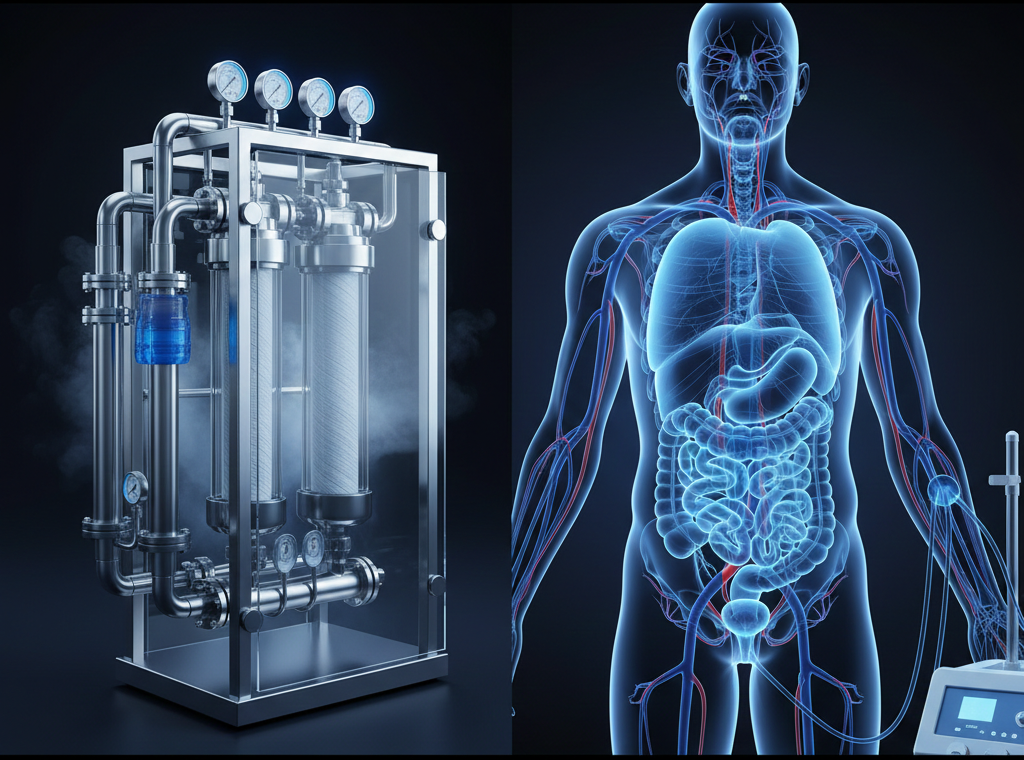
RO Water Dialysis Testing: Critical Challenges & Smart Solutions
Last Updated on October 25, 2026
A single hemodialysis patient is exposed to more than 100 litres of dialysis fluid in one session, and every drop of it starts as treated water. That is why RO Water Dialysis Testing sits at the centre of safe renal care. Reverse osmosis removes most dissolved salts, organics and microbes, but RO on its own doesn’t guarantee safe water. Membranes foul, pipes grow biofilm, and contamination can creep in after the RO unit. Below are the nine problems facilities run into most often when testing and maintaining dialysis water, and what you can do about each one.
1. Contaminant Detection and Monitoring
Challenge: Dialysis water has to be checked for very different kinds of contaminants: bacteria, bacterial endotoxins, and chemicals such as chlorine, chloramine, aluminium, nitrates and heavy metals. No single test covers all of them, and a sampling plan that only looks at one or two parameters can miss a real problem.
Solution: Combine several methods. Continuous conductivity monitoring tells you right away if the RO is losing rejection. Microbial culture (colony counts) and endotoxin testing by the LAL method show whether bacteria are taking hold in the system. Periodic chemical analysis confirms the water meets the chemical limits in your chosen standard, and Total Organic Carbon (TOC) can be a useful extra trend indicator for organic load. Sample at defined points, including the RO outlet and the end of the distribution loop, so you can tell where a problem starts. These measures form the base of any working RO Water Dialysis Testing programme.
Read More: Bacterial Endotoxin Testing (BET): A Detailed Overview
2. RO Water Dialysis Testing Compliance with AAMI Standards
Challenge: Water for dialysis must meet published quality standards. The main international reference is the ISO 23500 series, adopted in the US by the Association for the Advancement of Medical Instrumentation (AAMI). In Europe, the European Pharmacopoeia also has a monograph on water for diluting concentrated haemodialysis solutions, and countries differ on which reference they apply. These documents get revised (ISO 23500-3 was updated in 2024), so staying current takes real effort.
Solution: Know which standard your facility follows and build your testing plan around it. Set action levels below the maximum limits so you can respond before water goes out of specification. Keep written procedures, train staff when standards change, and keep complete records of every result and corrective action. Using an accredited external laboratory for independent testing gives you results that hold up in audits.
The commonly cited microbiological limits for dialysis water look like this:
| Parameter | Dialysis water (maximum) | Typical action level | Ultrapure dialysis fluid |
|---|---|---|---|
| Total viable microbial count | Below 100 CFU/mL | 50 CFU/mL | Below 0.1 CFU/mL |
| Bacterial endotoxins | Below 0.25 EU/mL | 0.125 EU/mL | Below 0.03 EU/mL |
Always confirm these values against the current edition of the standard your facility is required to follow.
Read More: Understanding Bacterial Endotoxins Method Validations: A Crucial Step in Pharmaceutical Safety
3. Biofilm Formation
Challenge: Biofilm is a slimy layer of bacteria that sticks to RO membranes, pipe walls, tanks and fittings. Once it’s established, it protects bacteria from disinfectants and keeps shedding cells and endotoxin into the water. A grab sample on a good day can look clean while biofilm keeps growing, which is why biofilm often goes unnoticed without structured, trended testing.
Solution: Prevent it rather than chase it. Disinfect the RO and distribution loop on a fixed schedule, not only when counts rise. Many modern systems use hot water disinfection, with loop temperatures commonly at 80°C or higher held for a set time. Regular heat cycles cut down on chemical use and help stop biofilm from settling in. An older loop with established biofilm may still need chemical cleaning first, so follow the equipment maker’s validated procedure and track your counts after each cycle to confirm it’s working.
4. Equipment Performance and Maintenance
Challenge: RO membranes lose performance through fouling, scaling and chemical damage. Pre-treatment parts such as sediment filters, softeners and carbon beds also wear out. When the carbon bed is exhausted, chlorine and chloramine can pass through, damaging membranes and putting patients at risk.
Solution: Track the numbers that show decline early: product water conductivity, percent rejection, feed and product pressures, and flow rates. Trend them over weeks, not just day to day, so a slow drop stands out. Keep pre-treatment in good shape, test for chlorine and chloramine after the carbon stage on a regular basis, and replace filters and media on schedule. Good pre-treatment takes load off the membranes and makes them last longer.
A planned maintenance routine is what keeps RO Water Dialysis Testing results consistent from month to month.
Read More: Medical Device Testing: Ensure Patient Safety
5. Operational Downtime
Challenge: If the RO system fails, or a maintenance job runs long, dialysis sessions get delayed or cancelled. For patients who depend on a fixed schedule, that’s a serious problem.
Solution: Build in redundancy where you can, such as a backup RO unit or a second pump, and keep critical spare parts on site. Online alarms for conductivity, pressure and temperature let your team step in before a small fault turns into a shutdown. Schedule disinfection and planned work outside treatment hours.
6. Data Management
Challenge: A dialysis water programme generates a lot of data: daily logbook readings, chemical checks, monthly culture and endotoxin results, and records of every disinfection. Kept on paper or in scattered spreadsheets, it’s hard to spot trends, and it’s slow to pull together for an inspection.
Solution: Use a digital system, such as a Laboratory Information Management System (LIMS), to store results in one place. You can plot counts by sampling point over time, flag results near the action level, and produce audit reports quickly.
7. Training and Expertise
Challenge: Running a dialysis water system well takes specific knowledge: how to sample without contaminating the sample, how to read RO trends, and how to respond to an out of limit result. Smaller facilities often have only one or two people who really know the system.
Solution: Run regular training, with refreshers when procedures or standards change. Write clear step by step procedures for sampling, disinfection and alarm response. Cross-train staff so the system keeps running safely when your main operator is away.
8. Water Distribution System Integrity
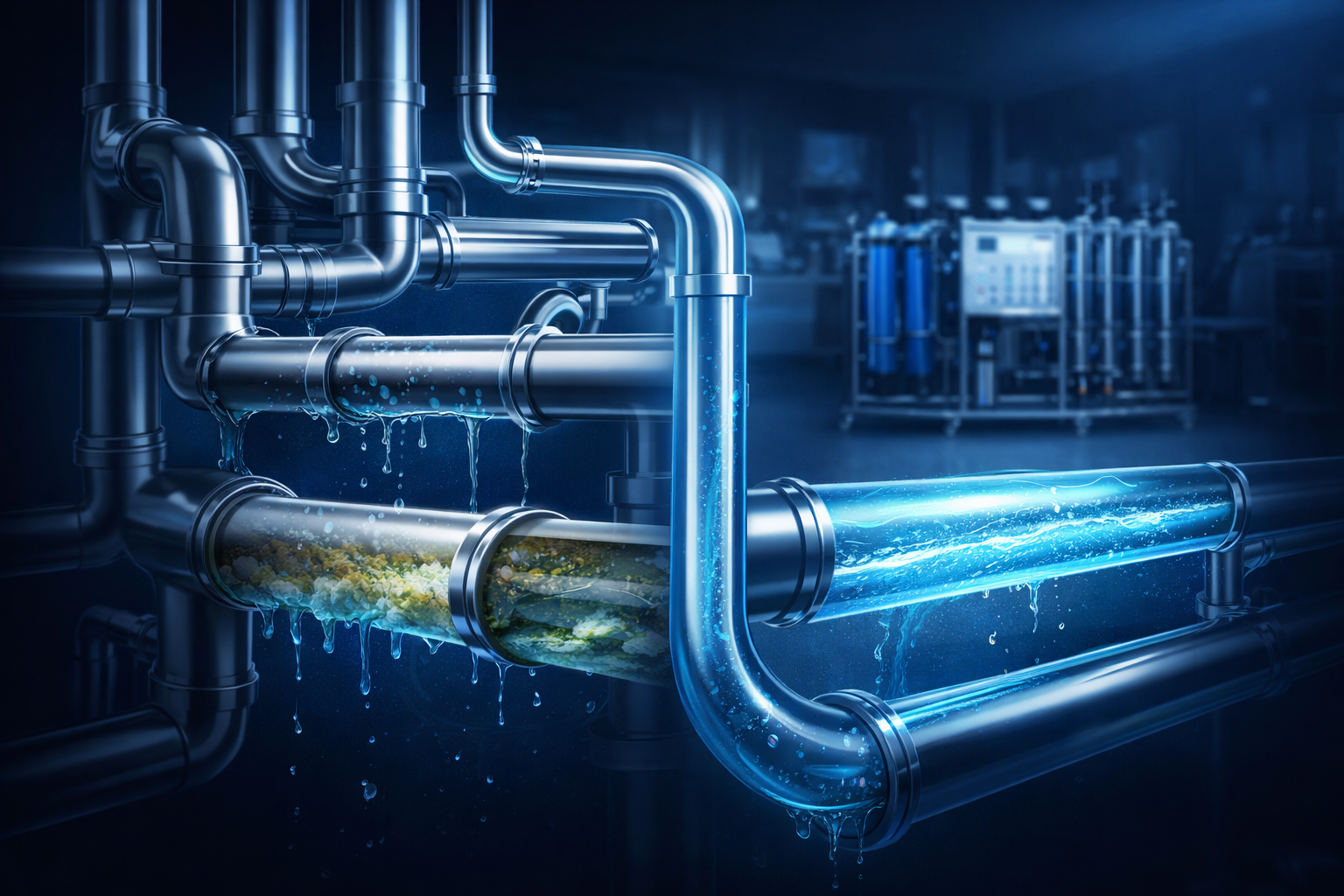
Challenge: Clean water from the RO can still get contaminated on its way to the dialysis machines. Leaks, dead legs (pipe sections where water sits still), low flow areas and poor joints all give bacteria somewhere to settle and grow.
Solution: Design the loop so water keeps moving, with no dead legs and short connections to each machine. Inspect and pressure test the system regularly to catch leaks. Choose pipe materials that resist corrosion, don’t leach contaminants and can handle your disinfection method, especially if you use hot water.
9. Temperature Control
Challenge: Warm, still water encourages bacterial growth. Pipes that run near heat sources, or water that sits in storage tanks, can drift into a temperature range where bacteria multiply faster. Temperature also affects how RO membranes perform.
Solution: Monitor water temperature at key points in the loop, insulate pipes that run through warm areas, and use heat exchangers where needed. Calibrate temperature sensors on a set schedule so the readings you rely on are accurate.
Frequently Asked Questions
How often should dialysis water be tested for bacteria and endotoxins?
Many programmes test monthly once the system is stable, with more frequent testing during validation, after repairs, or when results come close to action levels. Your required frequency depends on the standard and the regulator your facility follows.
What are the microbial limits for dialysis water?
Under ISO 23500-3, as adopted by AAMI, dialysis water is commonly held to below 100 CFU/mL for bacteria and below 0.25 EU/mL for endotoxins, with action levels usually set at 50 CFU/mL and 0.125 EU/mL.
What is ultrapure dialysis fluid?
Ultrapure dialysis fluid has a microbial count below 0.1 CFU/mL and endotoxins below 0.03 EU/mL. It’s a much tighter target than standard dialysis water and is often recommended for routine hemodialysis and is the starting point for online haemodiafiltration.
Does an RO system alone make water safe for dialysis?
No. RO removes most contaminants, but water can pick up bacteria and endotoxins in storage tanks and the distribution loop. Pre-treatment, regular disinfection and ongoing testing are all needed to keep water within limits.
Why is biofilm such a problem in dialysis water systems?
Biofilm shields bacteria from disinfectants and keeps releasing bacteria and endotoxins into the water. Once it’s established it’s hard to remove, so regular preventive disinfection works far better than cleaning after counts rise.
How Prewel Labs Can Help
Prewel Labs provides support for RO water dialysis testing and maintenance. With years of experience in the field, Prewel Labs offers the following services:
- Advanced Analytical Testing: TOC analysis, endotoxin testing, microbial assessments and more, carried out with modern equipment for accurate, reliable results.
- Regulatory Compliance Assistance: The Prewel Labs team follows AAMI and European Pharmacopoeia requirements and offers guidance and validation services to help your facility stay compliant.
- Biofilm Prevention Programs: Cleaning and sanitization protocols, including heat sanitization, to reduce biofilm risk and keep water quality on target.
- Maintenance and Troubleshooting: Predictive maintenance services that keep your RO system performing well and cut downtime, plus help diagnosing and fixing system issues quickly.
- Data Management Support: Digital tools for collecting, analysing and reporting water quality data, so regulatory reporting takes less effort.
- Training and Consultation: Regular workshops and training sessions that give your staff the skills to run and maintain RO systems properly.
By partnering with Prewel Labs, healthcare facilities can keep their dialysis water within specification, protect patients and run their water systems more efficiently.
If your facility is setting up a new water system, revalidating an existing one, or seeing results drift toward action levels, talk to Prewel Labs about a testing plan that fits your setup and the standard you work to.
Read More: Nurturing Health and Environment Through Water Quality Testing