






















The Impact of pH and Water Quality on Disinfectant Efficacy Testing Results
Last Updated on January 28, 2026 by Saurabh Kumar
Disinfectant efficacy testing is a crucial step in ensuring the reliability and performance of disinfectants in various industries, including pharmaceuticals, healthcare, and food processing. However, the effectiveness of disinfectants is not solely dependent on their chemical composition but also on external factors such as pH and water quality. These factors can significantly influence the outcome of disinfectant efficacy tests, potentially leading to inaccurate results and ineffective disinfection protocols.
In this blog, we will explore the impact of pH and water quality on disinfectant efficacy testing results, the challenges posed by these factors, and best practices to mitigate their influence.
The Role of pH in Disinfectant Efficacy
pH, which measures the acidity or alkalinity of a solution, plays a crucial role in the effectiveness of disinfectants. Disinfectants exhibit varying degrees of efficacy depending on the pH level of the solution in which they are used. Some key considerations include:
- Effect of pH on Disinfectant Performance:
- Chlorine-based Disinfectants: Work optimally at pH levels between 6.0 and 7.5. Higher pH levels reduce chlorine’s effectiveness by converting hypochlorous acid (HOCl), the active antimicrobial agent, into less effective hypochlorite ions (OCl⁻).
- Quaternary Ammonium Compounds (QACs): Perform well in slightly acidic to neutral conditions but can degrade in highly alkaline environments.
- Peracetic Acid: More effective in acidic conditions, as it decomposes more rapidly in alkaline solutions.
- Phenolic Compounds: Exhibit stability across a broader pH range but tend to perform best under acidic conditions.
- pH Effects on Microbial Susceptibility:
- Different microorganisms exhibit varying degrees of resistance at different pH levels. For example, bacterial spores and biofilms may become more resilient in extreme pH conditions, reducing the efficacy of disinfectants.
- Impact of pH on Disinfectant Stability:
- Disinfectants can degrade or lose potency when exposed to unfavorable pH conditions, affecting their shelf life and performance during efficacy testing.
Read More: The Evolution of Disinfectant Efficacy Testing
The Influence of Water Quality on Disinfectant Efficacy
Water is a primary diluent used in disinfectant formulations and testing. Its quality directly impacts disinfectant efficacy by influencing the stability, solubility, and activity of disinfectants. Several water quality factors can alter testing results:
- Hardness (Calcium and Magnesium Ions):
- Hard water containing high levels of calcium and magnesium ions can react with disinfectants, forming insoluble complexes that reduce efficacy.
- QACs are particularly susceptible to deactivation by hard water, as these compounds form precipitates that reduce their antimicrobial properties.
- Organic Matter Contamination:
- Organic load in water, such as proteins and fats, can interfere with disinfectant action by creating a physical barrier around microorganisms, reducing contact efficacy.
- High levels of organic content can lead to the consumption of disinfectant active ingredients, reducing their available concentration.
- Presence of Heavy Metals:
- Trace elements such as iron, copper, and manganese can catalyze the degradation of disinfectants, particularly oxidative agents like hydrogen peroxide and chlorine-based solutions.
- Microbial Contamination in Water:
- The presence of background microbial contamination in water used for diluting disinfectants can introduce variability in test results and lead to false conclusions regarding efficacy.
- Water Temperature:
- Elevated temperatures can enhance disinfectant activity but may also accelerate degradation, while colder temperatures can reduce solubility and reaction rates.
Read More: Nurturing Health and Environment Through Water Quality Testing
Challenges Posed by pH and Water Quality in Disinfectant Testing
- Variability in Test Conditions:
- Maintaining consistent pH and water quality conditions during disinfectant efficacy testing is challenging, potentially leading to inconsistent results.
- Difficulty in Standardization:
- Achieving standardized test conditions across different facilities is difficult due to variations in water sources and environmental factors.
- Regulatory Compliance:
 Best Practices for Controlling pH and Water Quality in Disinfectant Testing
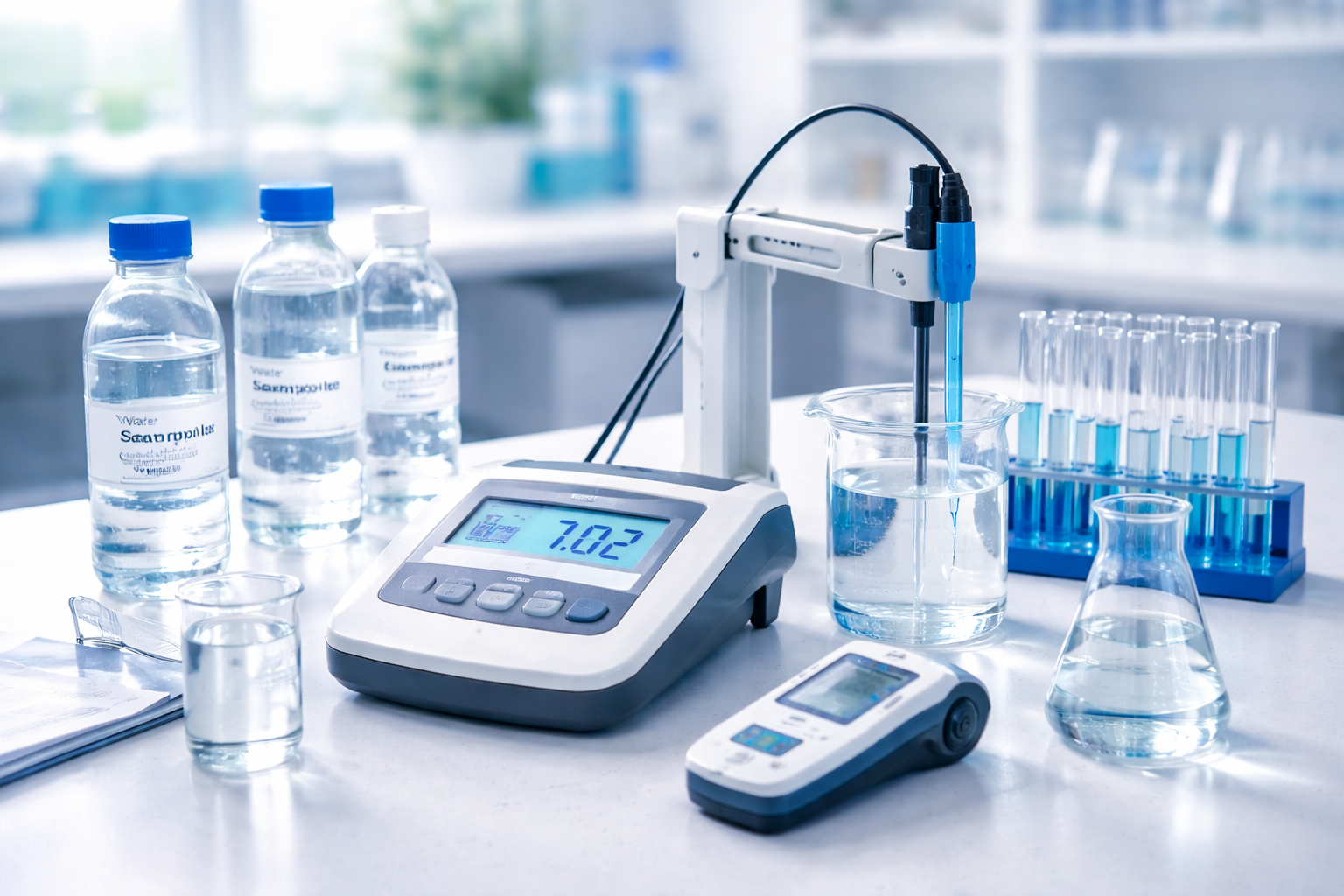 Best Practices for Controlling pH and Water Quality in Disinfectant Testing
- pH Monitoring and Adjustment:
- Regularly monitor and adjust the pH of disinfectant solutions to ensure optimal performance.
- Use pH buffers and controlled environments to maintain desired pH levels during efficacy testing.
- Water Quality Testing:
- Conduct periodic testing of water used in disinfectant preparation to assess hardness, organic content, and microbial load.
- Use purified or deionized water when possible to minimize variability.
- Standardized Testing Protocols:
- Implement validated testing protocols that account for variations in pH and water quality.
- Establish clear SOPs (Standard Operating Procedures) to ensure consistent test conditions.
- Use of Chelating Agents:
- Adding chelating agents can help mitigate the effects of hard water ions and enhance disinfectant efficacy.
- Training and Awareness:
- Train laboratory personnel on the impact of pH and water quality on disinfectant performance to ensure accurate test execution and interpretation.
Ensuring the accuracy and reliability of disinfectant efficacy testing requires careful consideration of external factors such as pH and water quality. By understanding their influence, implementing stringent quality control measures, and adhering to best practices, industries can optimize disinfection processes and meet regulatory standards effectively.
Read More: Disinfectant Efficacy Testing in Hospitals
How Prewel Labs Can Help You
At Prewel Labs, we understand the critical role that pH and water quality play in disinfectant efficacy testing. Our specialized services include:
- Comprehensive testing protocols that consider all influencing factors such as pH, water hardness, and organic load.
- Advanced analytical techniques to ensure the accuracy and reliability of test results.
- Customized solutions for industries such as pharmaceuticals, healthcare, and food processing.
- Regulatory compliance support to meet industry standards and guidelines.
- Expert consultation to optimize your disinfection validation strategies.
Partner with Prewel Labs to achieve precise and dependable disinfectant efficacy testing. Contact us today to learn more about our services.