























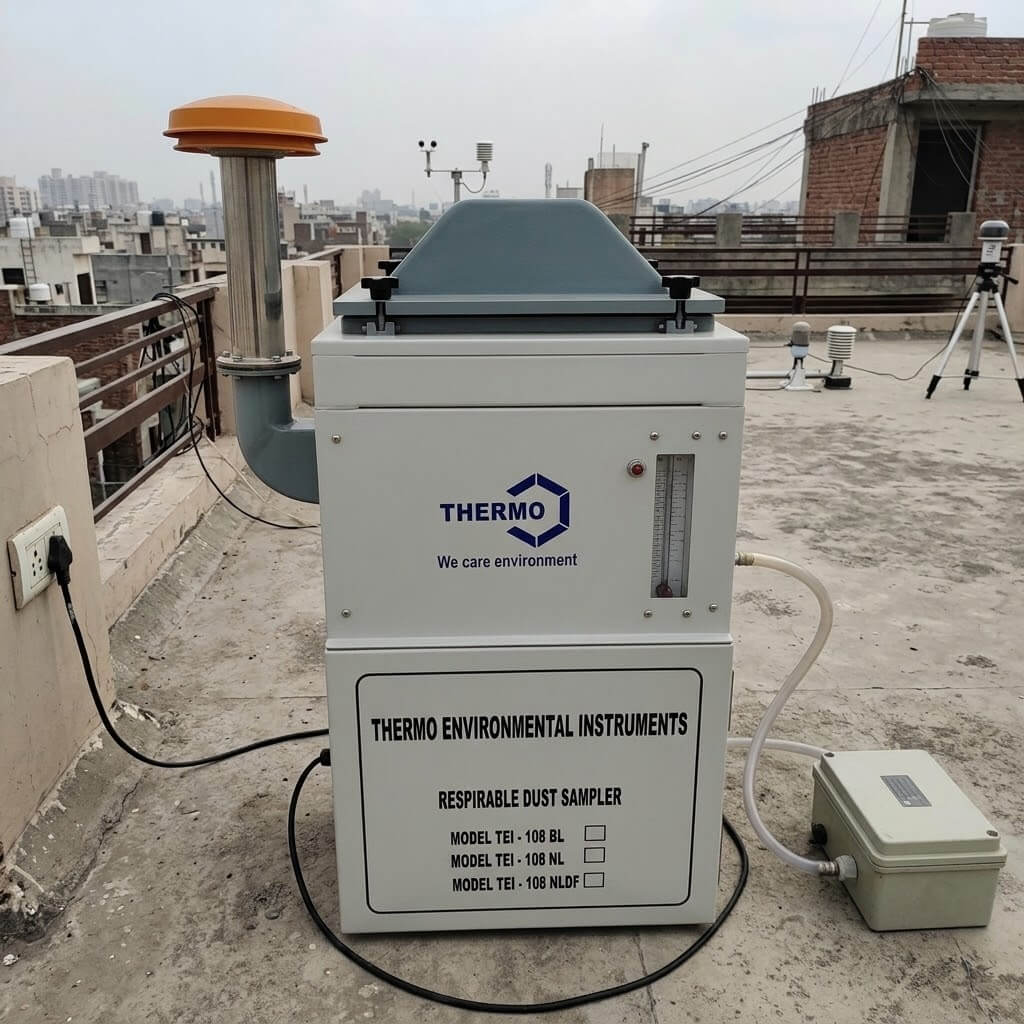
PM Filter Conditioning: Why Filters Need 24 Hours Before Weighing
When a particulate matter (PM) filter comes back from the field visibly darkened with dust, it is tempting to assume the hard part is over. There is clearly plenty of mass on it—surely a little moisture won’t matter? In practice, PM filter conditioning is just as important for a heavily loaded filter as it is for a lightly loaded one. Skipping or shortening it is one of the most common ways that gravimetric PM2.5 and PM10 results drift away from the truth.
This article explains why moisture, not particulate mass, is the variable that conditioning controls, and why regulatory methods insist on it.
The Swimming Pool Analogy: What a Wet Filter Really Weighs
Imagine stepping out of a swimming pool and straight onto a weighing scale. The number you see isn’t your body weight—it’s your body weight plus the water clinging to your skin and clothes. To find out what you actually weigh, you would dry off first.
A PM filter behaves in much the same way. After ambient air sampling, the filter doesn’t hold only particulate matter. It also carries moisture absorbed from the surrounding environment. Weigh it straight away and you are measuring particles plus water—and reporting that water as pollution.
Conditioning is the “towel.” It brings the filter and its collected particles to a known, controlled moisture state so that what the balance records is a stable, comparable mass.
Why Some Particles Hold On to Water: Hygroscopic Particles
Not all particulate matter interacts with moisture equally. Hygroscopic particles readily absorb water vapour from the air. Common examples in ambient PM include:
- Sulfates
- Nitrates
- Sea salts
- Ammonium compounds
Because these constituents make up a meaningful share of ambient PM in many locations, the amount of water a sampled filter carries can shift with the humidity it is exposed to between sampling and weighing. A filter collected on a humid day and weighed in a drier room—or vice versa—will gain or lose mass that has nothing to do with the air quality being measured.
The 200 µg Myth: Does a Heavy Load Make Moisture Negligible?
A common misconception in gravimetric analysis is that once a filter holds more than about 200 µg of particulate matter, the influence of moisture becomes negligible. The reasoning sounds intuitive: a large deposit should “swamp” any small moisture effect.
The problem is that the error doesn’t come from the particulate mass—it comes from the moisture content. A heavier deposit doesn’t stop water from being absorbed. If anything, a filter loaded with more hygroscopic material has more material capable of taking up water. The moisture effect doesn’t shrink just because the denominator grows.
How Small Mass Changes Become Big Errors
Gravimetric PM measurement depends on analytical microbalances. These instruments can detect mass changes as small as 1 µg, or even 0.1 µg. The US EPA reference method for PM2.5 (40 CFR Part 50, Appendix L), for example, requires a balance with a readability of ±1 µg.
At that level of sensitivity, a moisture gain or loss of just 10–50 µg is far from trivial. It can introduce significant measurement uncertainty and directly affect the reported PM concentration—potentially enough to change whether a result appears compliant.
The EPA method is so sensitive to humidity that it even sets limits on the filter material itself: an acceptable PM2.5 filter must gain no more than 10 µg when moved from 35% to 40% relative humidity over 24 hours. If a five-point change in humidity matters for a blank filter, it certainly matters for one loaded with hygroscopic particles.
What PM Filter Conditioning Involves
Conditioning means holding filters in a controlled temperature and humidity environment until they reach moisture equilibrium, then weighing them in that same environment. Both pre-sampling (tare) and post-sampling (gross) weighings are performed under matched conditions so that the difference reflects particulate mass alone.
Conditioning Duration
Filters are typically conditioned for at least 24 hours before weighing. This gives both the filter medium and the collected particles time to equilibrate with the room’s moisture level, producing stable, repeatable readings.
Temperature and Relative Humidity Ranges
The exact environmental set points depend on the reference method being followed:
- US EPA (40 CFR Part 50, Appendix L): a 24-hour mean temperature of 20–23 °C, controlled to within ±2 °C, and a 24-hour mean relative humidity generally of 30–40%, controlled to within ±5% RH. Where ambient humidity during sampling is below 30%, conditioning within ±5% of that ambient mean is permitted.
- EN 12341:2014 (European PM10/PM2.5 reference method): a weighing-room temperature of 19–21 °C and relative humidity of 45–50%, both as hourly means.
The ranges differ between methods, but the principle is identical: keep temperature and humidity tightly controlled and consistent between pre- and post-sampling weighings.
How Standards Treat Moisture in Gravimetric Analysis
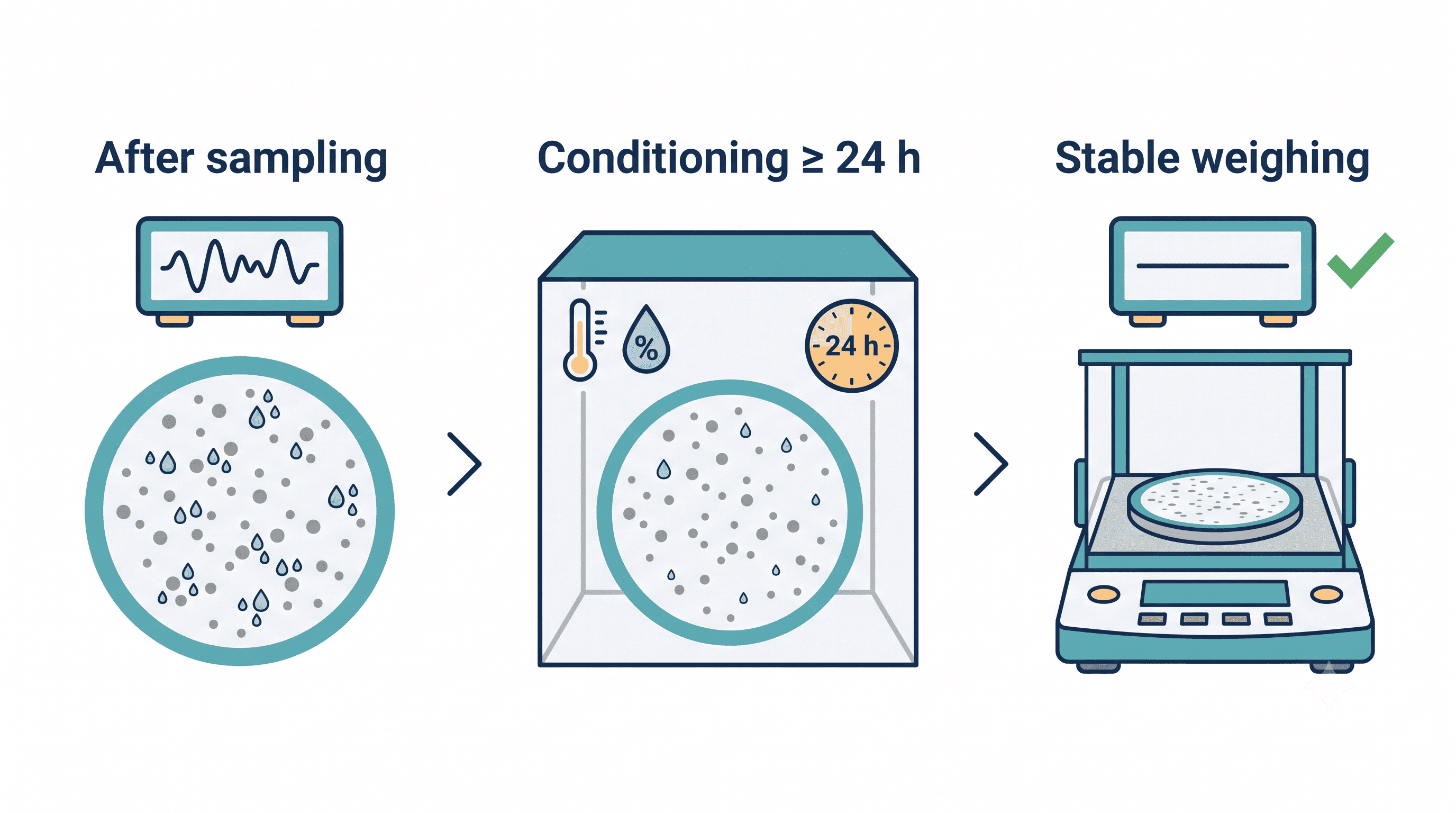
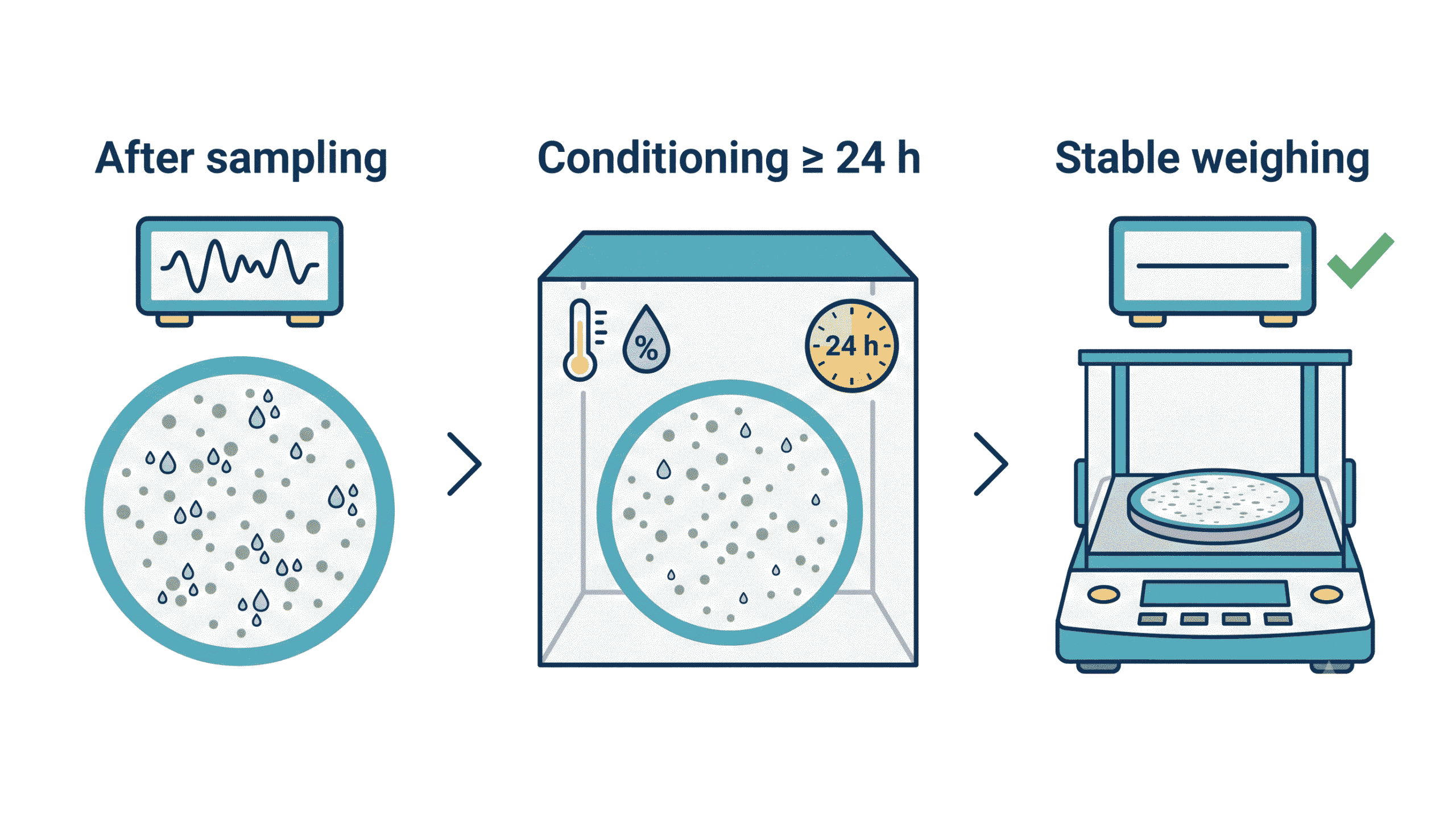
The need for controlled conditioning is built into the major particulate sampling frameworks, including USEPA Reference Methods, EN 12341, and ISO-based particulate sampling procedures. These methods recognise moisture as one of the largest contributors to weighing uncertainty, and they treat conditioning as a mandatory step rather than an optional refinement.
For laboratories, this translates into practical requirements: a dedicated conditioning and weighing environment, continuous monitoring of temperature and humidity, and documented equilibration times for every filter batch.
Why Conditioning Matters for Reliable PM Data
Skipping conditioning—or shortening it because a filter “looks heavy enough”—undermines the three things gravimetric data is meant to deliver:
- Accuracy: the reported mass reflects particulate matter, not absorbed water.
- Repeatability: the same filter weighed twice gives the same answer.
- Comparability: results from different days, seasons, sites, and laboratories can be compared meaningfully.
For regulatory monitoring, compliance reporting, and health-based air quality assessments, all three are non-negotiable.
Read more: Why Test Indoor Air Quality (IAQ)?
Frequently Asked Questions
Why are PM filters conditioned before weighing?
Filters absorb moisture from the air, especially when they carry hygroscopic particles such as sulfates, nitrates, sea salts, and ammonium compounds. Conditioning brings the filter to moisture equilibrium in a controlled environment so the measured mass reflects particulate matter rather than water.
How long should PM filters be conditioned?
Filters are typically conditioned for at least 24 hours under controlled temperature and humidity before weighing, as required by methods such as the US EPA PM2.5 reference method.
Does a heavily loaded filter still need conditioning?
Yes. The moisture effect depends on how much water the filter and particles absorb, not on how much particulate mass is present. A filter with more than 200 µg of PM can still gain or lose enough moisture to distort the result.
How much can moisture affect a PM measurement?
Microbalances used for PM weighing detect changes of 1 µg or less, so a moisture swing of 10–50 µg can introduce significant uncertainty into the reported PM concentration.
What temperature and humidity are used for filter conditioning?
It depends on the method. The US EPA reference method uses 20–23 °C and generally 30–40% RH, while EN 12341:2014 specifies 19–21 °C and 45–50% RH.
Reliable PM Testing with Prewel Labs
Accurate particulate matter data starts long before a filter reaches the balance—and proper conditioning is one of the steps that makes the difference.
At Prewel Labs, we support reliable environmental monitoring through scientifically validated testing practices that deliver accurate, reproducible, and regulatory-compliant results.