
























Mastering Bacterial Endotoxin Testing: A Comprehensive Guide for the Pharmaceutical Industry
Bacterial endotoxin testing (BET) is an essential component of quality control in the pharmaceutical and medical device industries. Endotoxins, toxic components of the outer membrane of Gram-negative bacteria, can have severe pyrogenic effects if introduced into the human body. These effects include fever, inflammation, and in severe cases, septic shock, which can be life-threatening. For manufacturers, ensuring products are free from harmful endotoxins is not just about compliance—it’s about patient safety and maintaining trust in the healthcare system.
BET plays a pivotal role in safeguarding public health by identifying and quantifying endotoxins in products like injectable drugs, intravenous fluids, vaccines, and implantable medical devices. The presence of endotoxins in these products can lead to adverse reactions in patients, making rigorous testing a non-negotiable aspect of pharmaceutical manufacturing. Furthermore, a failure to comply with bacterial endotoxin testing requirements can result in regulatory repercussions, product recalls, and significant financial losses for companies.
In this highly regulated industry, BET ensures that products meet stringent safety standards before reaching patients. By implementing robust testing protocols, manufacturers not only protect patients but also uphold their commitment to delivering high-quality, reliable products. **
This blog will explore the fundamentals of bacterial endotoxin testing, its critical role in manufacturing, key methods, regulatory requirements, and emerging trends. Whether you’re a quality assurance professional or a regulatory compliance officer, this guide will provide actionable insights to enhance your BET processes.
1. What is Bacterial Endotoxin Testing?
Bacterial endotoxin testing (BET) is a specialized process used to detect and quantify endotoxins, which are lipopolysaccharides (LPS) found in the outer membrane of Gram-negative bacteria. These endotoxins are released during bacterial cell death or multiplication and are known for their potent pyrogenic effects. When present in pharmaceutical products or medical devices, endotoxins can trigger severe immune responses in patients, including fever, inflammation, and, in extreme cases, septic shock. This makes BET a vital component of the manufacturing and quality assurance process in the pharmaceutical and medical device industries.
BET is especially crucial for products intended for parenteral use, such as sterile injectables, intravenous fluids, implantable devices, and dialysis solutions. The human body is highly sensitive to even trace amounts of endotoxins, making rigorous testing an absolute necessity to prevent adverse reactions. Contaminated products not only pose serious risks to patient safety but can also lead to regulatory non-compliance, product recalls, and reputational damage for manufacturers.
The testing methods employed in BET, such as the gel-clot assay, turbidimetric assay, and chromogenic assay, are designed to detect endotoxin levels with precision. These methods ensure that the products meet stringent safety standards before reaching the market. BET also serves as an indicator of overall cleanliness and contamination control within the manufacturing environment, helping to identify potential lapses in processes or equipment sterilization.
By implementing BET as part of a robust quality control strategy, manufacturers demonstrate their commitment to patient safety and regulatory compliance, ensuring the delivery of safe, effective, and high-quality products.
Read More: Bacterial Endotoxin Testing (BET): A Detailed Overview
2. Why is Bacterial Endotoxin Testing Crucial?
Patient Safety
The primary reason bacterial endotoxin testing (BET) is indispensable is its role in safeguarding patient health. Endotoxins are potent pyrogens capable of inducing a range of adverse reactions, from mild fever and chills to severe complications like septic shock, organ failure, and even death in extreme cases. Patients receiving contaminated products, particularly those undergoing intravenous therapies or using implantable devices, are at significant risk. BET ensures that such products are rigorously screened for harmful endotoxin levels, minimizing the potential for adverse reactions. By prioritizing BET, manufacturers uphold their ethical and professional duty to protect end-users from preventable harm.
Regulatory Compliance
Global health authorities, including the U.S. Food and Drug Administration (FDA), the European Medicines Agency (EMA), and other regulatory bodies, mandate stringent bacterial endotoxin testing requirements for pharmaceutical products and medical devices. These regulations are non-negotiable, with specific endotoxin limits defined for different product categories, such as parenteral drugs, dialysis solutions, and vaccines. Non-compliance can have dire consequences, including:
- Product Recalls: A single instance of endotoxin contamination can lead to widespread product recalls, disrupting supply chains and eroding customer trust.
- Financial Penalties: Companies face hefty fines and legal actions for failing to meet regulatory standards.
- Reputation Damage: Non-compliance tarnishes a company’s reputation, impacting customer loyalty and stakeholder confidence.
By conducting BET in accordance with established guidelines, manufacturers not only ensure regulatory compliance but also position themselves as reliable partners in the healthcare ecosystem.
Product Quality Assurance
BET is integral to maintaining the overall quality and integrity of pharmaceutical and medical device products. Elevated endotoxin levels serve as a red flag, indicating contamination during manufacturing processes. This could stem from:
- Raw Materials: Contaminated inputs can introduce endotoxins into the production process.
- Manufacturing Equipment: Insufficient cleaning or sterilization can lead to endotoxin accumulation on equipment surfaces.
- Environmental Factors: Poorly controlled manufacturing environments increase the risk of endotoxin contamination.
Regular BET not only identifies such issues but also provides valuable insights into process weaknesses, enabling timely corrective actions. This proactive approach ensures that every product batch meets stringent safety standards, preventing costly recalls and ensuring consistent product quality.
Brand Credibility and Market Access
In a competitive global market, a strong reputation for delivering safe and high-quality products can differentiate a company from its competitors. By investing in robust bacterial endotoxin testing protocols, manufacturers build trust with regulatory bodies, healthcare providers, and end-users. Moreover, compliance with BET standards facilitates market access, particularly in regions with stringent regulatory requirements like the U.S., Europe, and Japan.
Long-Term Cost Savings
While BET requires upfront investment in testing equipment, trained personnel, and process validation, it significantly reduces long-term costs. Detecting and addressing endotoxin contamination early in the manufacturing process prevents expensive recalls, legal liabilities, and damage to brand reputation. Additionally, efficient BET processes contribute to overall operational efficiency by minimizing downtime and ensuring smooth regulatory audits.
In summary, bacterial endotoxin testing is not merely a regulatory obligation; it is a fundamental pillar of patient safety, product quality, and business sustainability. By prioritizing BET, manufacturers demonstrate their commitment to excellence, setting a high standard for the industry and ensuring the safety of the patients they serve.
3. Key Methods of Bacterial Endotoxin Testing
Gel-Clot Method
The gel-clot method is a traditional and well-established approach to bacterial endotoxin testing. It relies on the use of Limulus Amebocyte Lysate (LAL), a reagent derived from the blood of horseshoe crabs. When endotoxins are present, they activate a cascade of reactions in the LAL, ultimately forming a visible gel clot. This method is valued for its simplicity and reliability, especially for qualitative assessments of endotoxin presence. However, it has limitations, including being time-consuming and less suited for high-throughput testing scenarios. Additionally, the dependency on horseshoe crab-derived reagents has raised environmental and sustainability concerns, prompting the development of synthetic alternatives.
Turbidimetric Assay
The turbidimetric assay measures changes in turbidity—or cloudiness—in a solution as a result of endotoxin-induced clotting. This method is particularly advantageous for laboratories requiring rapid, high-volume testing. The results are quantitative, providing precise endotoxin levels in the sample. This makes the turbidimetric assay a preferred choice in modern, automated laboratory environments. Furthermore, its adaptability to microplate readers and other automated systems enhances efficiency and consistency, enabling manufacturers to meet stringent regulatory requirements with ease.
Chromogenic Assay
The chromogenic assay is a highly sensitive method that detects endotoxins by triggering a colorimetric reaction. When endotoxins interact with the LAL reagent, they activate an enzymatic reaction that produces a color change. The intensity of the color is directly proportional to the endotoxin concentration, allowing for precise, quantitative measurements. This method is particularly effective for detecting low levels of endotoxins, making it ideal for products requiring stringent endotoxin limits, such as vaccines and intravenous fluids. Additionally, the chromogenic assay is widely used in research and development settings due to its high sensitivity and reproducibility.
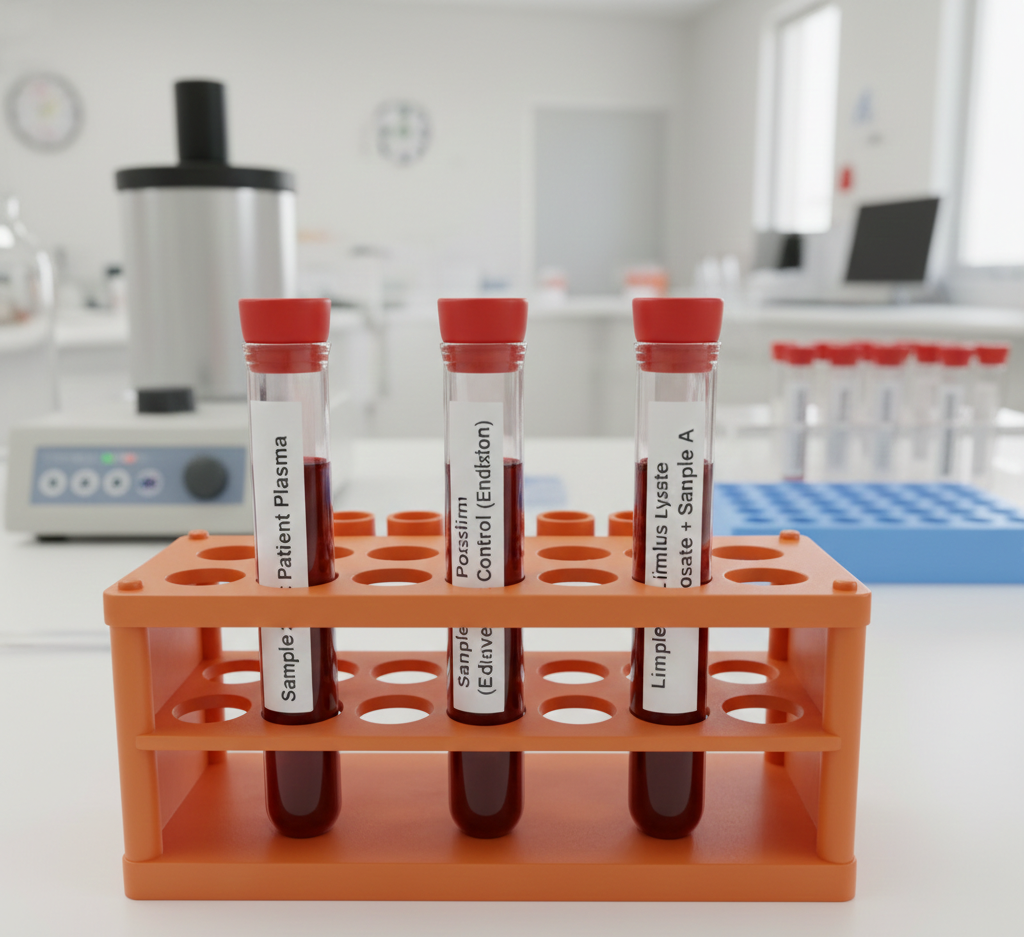
4. How to Perform Bacterial Endotoxin Testing
Performing bacterial endotoxin testing (BET) requires adherence to strict protocols to ensure accurate and reliable results. Here is a step-by-step guide to conducting BET:
1. Preparation of Samples and Reagents
- Sample Collection: Collect samples in sterile containers to prevent contamination. Ensure the samples are representative of the batch being tested.
- Reagent Preparation: Prepare the Limulus Amebocyte Lysate (LAL) reagent or other testing reagents as per the manufacturer’s instructions. Use endotoxin-free water and materials to avoid introducing contamination.
- Dilution: If necessary, dilute the sample to fall within the quantifiable range of the chosen test method.
Read More: Sterility Testing: Ensuring Medical Device Safety
2. Selection of Test Method
Choose the appropriate BET method based on the sample type, required sensitivity, and available resources. The methods include:
- Gel-clot assay for qualitative detection.
- Turbidimetric or chromogenic assays for quantitative analysis.
3. Performing the Test
- Gel-Clot Method:
- Mix the LAL reagent with the sample in a pre-sterilized tube.
- Incubate at the specified temperature (usually 37°C) for the recommended time (e.g., 60 minutes).
- Observe the formation of a gel clot, indicating the presence of endotoxins.
- Turbidimetric Assay:
- Combine the LAL reagent and sample in a microplate or test tube.
- Place the sample in a spectrophotometer and measure turbidity at specific intervals.
- Use the readings to calculate endotoxin levels.
- Chromogenic Assay:
- Add the chromogenic substrate and LAL reagent to the sample.
- Incubate at the recommended temperature and time.
- Measure the color intensity using a spectrophotometer and calculate endotoxin concentrations based on a standard curve.
4. Validation and Controls
- Positive Controls: Include samples spiked with a known concentration of endotoxins to verify the test’s sensitivity and accuracy.
- Negative Controls: Use endotoxin-free water or materials to ensure no contamination.
- Standard Curve: Create a standard curve using known endotoxin concentrations to quantify test results accurately.
Read More: Understanding Bacterial Endotoxins Method Validations: A Crucial Step in Pharmaceutical Safety
5. Documentation and Analysis
- Record all observations, measurements, and deviations in a laboratory notebook or electronic system.
- Compare the results against regulatory thresholds to determine compliance.
- Investigate any anomalies or unexpected results.
6. Reporting and Actions
- Prepare a comprehensive report detailing the testing process, results, and conclusions.
- If endotoxin levels exceed acceptable limits, initiate corrective actions such as identifying contamination sources and retesting after mitigation.
By following these steps, manufacturers can ensure that bacterial endotoxin testing is performed accurately and consistently, safeguarding product quality and patient safety.
5. Emerging Trends and Technologies in BET
Bacterial endotoxin testing (BET) is a critical part of pharmaceutical and medical device manufacturing, ensuring products are free from endotoxins that could cause severe reactions in patients. As the demand for precision, efficiency, and sustainability increases, several cutting-edge trends and technologies are revolutionizing BET processes. These developments promise to enhance the accuracy, speed, and ethical considerations in endotoxin detection.
4.1 Automation and Robotics
The integration of automation and robotics in BET processes has transformed traditional manual testing methods, offering enhanced precision, reduced errors, and increased throughput. Automation systems can manage a variety of complex tasks involved in BET, including sample preparation, incubation, and reading of results. By eliminating the variability that human operators introduce, automation ensures more consistent and reproducible outcomes. This technological shift allows for large-scale testing with minimal human intervention, which is essential for high-volume production environments.
Furthermore, robotic systems are being deployed in laboratories to handle high-throughput testing. These robotic systems can efficiently carry out repetitive tasks, such as pipetting, mixing, and dispensing reagents. With the ability to run numerous samples simultaneously, robotic automation drastically reduces the time needed for testing, which is particularly beneficial in large-scale pharmaceutical production. As robotic systems become more sophisticated, they can integrate with laboratory information management systems (LIMS) to provide seamless, real-time data tracking and reporting, ensuring compliance with regulatory standards.
4.2 Recombinant Factor C (rFC) Assays
Recombinant Factor C (rFC) assays are quickly emerging as a viable alternative to the traditional Limulus Amebocyte Lysate (LAL) test, which relies on the blood of horseshoe crabs. The rFC assay uses a synthetic version of the Factor C protein from the horseshoe crab, offering a more sustainable, ethical, and reproducible method for endotoxin detection. As concerns over the impact of horseshoe crab harvesting grow, rFC assays are being adopted across the pharmaceutical and medical device industries due to their ability to provide similar or even superior performance compared to LAL.
One of the key advantages of rFC assays is their consistency. Unlike LAL, which can exhibit variability depending on the batch of horseshoe crab blood used, rFC assays are produced through recombinant DNA technology, offering a controlled and consistent supply. This reduces potential issues related to the quality of reagents and improves the reliability of results. Additionally, rFC assays are more environmentally friendly, eliminating the need for harvesting horseshoe crabs, a practice that has raised ethical concerns in recent years. As more regulatory bodies, such as the U.S. FDA, increasingly recognize rFC assays as a valid testing method, their use is likely to expand across various industries.
4.3 Digital Integration
Digital technologies are playing an increasingly important role in enhancing the efficiency and compliance of bacterial endotoxin testing. The integration of digital tools and systems into BET workflows enables laboratories to streamline operations, improve data accuracy, and enhance regulatory compliance. One of the most significant advancements in digital integration is the use of real-time monitoring systems. These systems allow operators to track the progress of tests and ensure that critical parameters such as temperature and time are maintained within the required specifications, reducing the risk of errors or non-compliance.
Additionally, digital platforms are being leveraged for comprehensive data tracking and management. Through Laboratory Information Management Systems (LIMS), all test data, including results, reagents used, and procedural steps, can be captured and stored electronically. This not only ensures that data is easily accessible but also helps with traceability in case of audits or inspections. Moreover, digital integration facilitates the automation of regulatory documentation. By capturing all necessary information and generating reports in real time, laboratories can ensure that they meet stringent regulatory requirements, such as those outlined by the FDA and EMA, without the need for labor-intensive manual reporting.
The use of cloud-based technologies further enhances the accessibility and security of test data. Cloud storage enables laboratories to centralize their data, providing remote access and facilitating collaboration between different teams or locations. This level of integration not only improves operational efficiency but also supports better decision-making through advanced analytics. For example, predictive analytics tools can help identify trends in endotoxin levels or detect patterns in testing performance, allowing laboratories to optimize processes and reduce errors proactively.

5. Challenges in Bacterial Endotoxin Testing
While bacterial endotoxin testing (BET) is essential to ensuring the safety of pharmaceutical and medical device products, several challenges can complicate the process and impact the accuracy, reliability, and efficiency of the testing. Addressing these challenges is critical to maintaining high-quality standards and compliance with regulatory requirements. The primary challenges in BET include sample preparation, interference factors, and the need for specialized expertise.
5. Challenges in Bacterial Endotoxin Testing
Bacterial endotoxin testing (BET) is essential for ensuring product safety, but several challenges can complicate the process. Addressing these is crucial for maintaining high standards and compliance with regulatory requirements.
5.1 Sample Preparation
- Contamination Risks:
- Environmental contaminants (dust, residual chemicals, handling) can introduce endotoxins and lead to inaccurate test results.
- Critical to maintain a clean and controlled environment during sample collection and handling.
- Dilution Accuracy:
- Endotoxins are present in low concentrations, requiring careful dilution for accurate results.
- Improper dilution can skew results and interfere with the assay, especially in complex matrices (e.g., biologics, medical devices).
- Handling and Storage:
- Some samples require special handling (freezing or preservatives) to stabilize endotoxins.
- Failure to follow guidelines for sample transport and storage can lead to endotoxin degradation.
- Environmental Control:
- Ensure proper control over temperature, humidity, and light to maintain endotoxin stability.
5.2 Interference Factors
- Substances that Interfere with Assays:
- Common substances like surfactants, preservatives, and proteins can affect BET accuracy by masking endotoxins or altering assay reactions.
- Surfactant Interference:
- Surfactants in drug formulations can inhibit the Limulus Amebocyte Lysate (LAL) assay, leading to false negatives.
- Preservative Effects:
- Some preservatives may increase assay sensitivity, causing false positives.
- Alternative Methods:
- Recombinant Factor C (rFC) assays can be used to minimize interference from substances like surfactants and preservatives.
- Matrix Interference:
- Complex samples like vaccines and biologics can introduce matrix effects that obscure endotoxin presence or interfere with reagents.
- Customized protocols and matrix-specific validation can help address these issues.
5.3 Skill Gaps
- Need for Skilled Personnel:
- BET is a technical process that requires in-depth knowledge to interpret results accurately.
- Operators must understand the science behind the assays and be capable of troubleshooting issues such as contamination or reagent failure.
- Evolving Testing Methodologies:
- As BET methods evolve, ongoing training is essential to keep personnel up-to-date with new technologies and regulations.
- Knowledge in microbiology, biochemistry, and regulatory guidelines is necessary for effective testing.
- Regulatory Complexity:
- Training and Education:
- Laboratories must invest in continuous education and training to ensure personnel are equipped to handle evolving testing methods and regulatory demands.
- Regular competency assessments and professional development programs are crucial to avoid errors, delays, or non-compliance.
5.4 Addressing the Challenges
- Adopt State-of-the-Art Equipment:
- Invest in advanced equipment and automated systems to streamline the BET process.
- Mitigate Interference:
- Use specialized interference-neutralizing agents and develop tailored protocols to minimize matrix effects and interference from substances.
- Ongoing Training:
- Implement tailored training programs to equip personnel with the knowledge and skills to handle new technologies, troubleshoot issues, and navigate evolving regulations.
- Comprehensive Approach:
- Use a multifaceted approach involving technology, expertise, and refined protocols to ensure reliable endotoxin detection and compliance.
6. Regulatory Guidelines and Standards
Regulatory guidelines are essential for ensuring the accuracy and consistency of bacterial endotoxin testing (BET) across the pharmaceutical and medical device industries. These frameworks provide the necessary protocols, acceptance criteria, and safety thresholds to ensure product safety and compliance. Key guidelines include:
- USP <85>: The United States Pharmacopeia (USP) <85> outlines the standard protocols for BET, including test methods like the Limulus Amebocyte Lysate (LAL) assay and alternative assays such as the Recombinant Factor C (rFC) assay. It defines the acceptance criteria for endotoxin levels to ensure products are safe for patient use.
- European Pharmacopeia (EP): The European Pharmacopeia (EP) sets specific requirements for BET in the European market, with guidelines that mirror international standards but may include regional differences. These guidelines ensure that products sold in Europe meet the required safety and quality benchmarks for endotoxin testing.
- FDA Guidance: The U.S. Food and Drug Administration (FDA) provides detailed guidance on endotoxin limits for specific product categories, including sterile injectables and vaccines. These guidelines are designed to ensure that endotoxin contamination does not pose a risk to patient safety, and they include recommendations for validation and quality control procedures.
Adhering to these guidelines is non-negotiable for manufacturers wishing to market their products globally. Compliance with these standards not only guarantees patient safety but also facilitates market access across various regions, as these protocols are widely accepted by regulatory authorities worldwide. Additionally, manufacturers must continuously monitor any updates to these guidelines, as regulatory bodies regularly revise their requirements to keep pace with scientific advancements and industry best practices.
Read More: FDA Regulations and Medical Device Testing
7. Best Practices for Accurate BET Results
Validate Testing Methods
Ensure that BET methods are validated for each product type to avoid inaccurate readings.
Control Contamination
Implement stringent cleanroom practices to minimize endotoxin contamination during manufacturing.
Routine Monitoring
Conduct periodic BET to detect endotoxins early and maintain compliance with regulatory standards.
8. The Future of Bacterial Endotoxin Testing
The landscape of BET is evolving rapidly:
- Ethical Testing: Moving away from animal-derived reagents like LAL towards sustainable alternatives such as rFC.
- AI Integration: Utilizing AI to analyze test data, predict trends, and improve decision-making.
- Predictive Maintenance: Employing advanced monitoring systems to preemptively address endotoxin contamination risks.

How Prewel Labs Can Assist with Bacterial Endotoxin Testing
At Prewel Labs, we understand the critical role bacterial endotoxin testing (BET) plays in ensuring the safety and compliance of pharmaceutical and medical device products. Our comprehensive BET services are designed to meet the specific needs of manufacturers, ensuring accurate, reliable, and regulatory-compliant results.
Expertise and Advanced Testing Methods
Prewel Labs employs state-of-the-art technologies and techniques, including the Limulus Amebocyte Lysate (LAL) test, recombinant Factor C (rFC) assays, and other advanced methods, to deliver precise endotoxin quantification. Our experienced team ensures adherence to the latest pharmacopeial guidelines (USP, EP, JP), guaranteeing robust testing practices.
Customized Testing Solutions
Every product is unique, and so are its testing requirements. Prewel Labs offers tailored endotoxin testing solutions that address the specific challenges associated with your product, whether it’s a pharmaceutical injectable, a medical device, or a biologic.
Regulatory Compliance Support
Navigating complex regulatory landscapes can be challenging. Prewel Labs not only provides testing services but also offers expert guidance to ensure your products meet stringent regulatory requirements, helping you avoid costly delays or non-compliance penalties.
Quick Turnaround Times
Time is of the essence in pharmaceutical manufacturing. Prewel Labs prioritizes efficiency without compromising quality, delivering timely results to keep your production schedules on track.
Comprehensive Documentation
We provide detailed, audit-ready reports that simplify regulatory submissions and inspections. Our documentation includes all the critical data you need to demonstrate compliance with industry standards.
Ongoing Partnership
At Prewel Labs, we don’t just test; we partner with you for long-term success. Our team is available for consultation, training, and troubleshooting to help optimize your endotoxin testing strategies and maintain cleanroom hygiene standards.
By choosing Prewel Labs as your bacterial endotoxin testing partner, you gain access to a trusted ally dedicated to quality, compliance, and safety. Let us help you ensure your products meet the highest standards in endotoxin control.
FAQs
1. Can bacterial endotoxin testing detect endotoxins from non-bacterial sources?
No, bacterial endotoxin testing specifically targets endotoxins produced by gram-negative bacteria, such as lipopolysaccharides (LPS). It is not designed to detect pyrogens or toxins from non-bacterial sources. For broader detection of pyrogens, a Monocyte Activation Test (MAT) or Rabbit Pyrogen Test (RPT) may be required.
2. What factors can cause false positives or negatives in BET results?
Several factors can interfere with BET accuracy:
- False Positives: Contamination of samples, equipment, or reagents with environmental endotoxins.
- False Negatives: Presence of inhibitory substances in the sample, such as high protein content, pH imbalances, or chelating agents. Validation and appropriate sample preparation are crucial to mitigate these issues.
3. How does BET differ when testing pharmaceuticals versus medical devices?
For pharmaceuticals, BET focuses on quantifying endotoxins in liquid formulations, while for medical devices, testing is performed on extracts obtained from the device’s surface. The extraction process is carefully validated to ensure it effectively removes any endotoxins present for accurate measurement.
4. Is recombinant Factor C (rFC) testing a viable alternative to traditional LAL testing?
Yes, rFC assays are an emerging alternative to traditional LAL methods. Unlike LAL, which relies on horseshoe crab blood, rFC is a synthetic, animal-free method. It provides comparable sensitivity, is environmentally sustainable, and aligns with the goals of reducing animal-derived testing in pharmaceuticals. However, regulatory acceptance varies, so consult the relevant pharmacopeial guidelines before adoption.
5. How does cleanroom hygiene impact bacterial endotoxin levels in production?
Poor cleanroom hygiene can lead to endotoxin contamination in products, equipment, and air. Endotoxins are heat-stable and can persist even after bacterial cells are destroyed. Regular monitoring, validated cleaning protocols, and adherence to good manufacturing practices (GMP) are essential to minimize endotoxin risks in controlled environments.

Bacterial endotoxin testing (BET) is not just a regulatory requirement; it is a vital element of patient safety and product quality. Given the potentially severe consequences of endotoxin contamination, such as fever, septic shock, or even death, ensuring the accuracy of BET processes is crucial for the integrity of pharmaceutical products and medical devices. Beyond compliance, BET serves as a fundamental safeguard for public health.
To meet evolving regulatory standards and industry demands, manufacturers must adopt innovative testing methods such as the Limulus Amebocyte Lysate (LAL) assay, recombinant Factor C (rFC) assays, and automation. These technologies improve the accuracy, efficiency, and consistency of testing, while minimizing human error and supporting high-throughput testing. Digital tools that integrate real-time monitoring and data tracking also streamline the process and ensure compliance with regulations.
However, technology alone is not enough. Manufacturers must stay up to date with the latest regulatory changes from bodies like the FDA and EMA. Adhering to these updates and refining internal processes ensures that products meet the highest safety standards, protecting both the patient and the manufacturer from the risks associated with non-compliance.
Investing in personnel training and skill development is equally important. As BET techniques evolve, so too must the knowledge and expertise of the teams responsible for conducting these tests. Ongoing education helps ensure that staff members can handle new methods and interpret results accurately, reducing the risk of errors and maintaining high testing standards.
By adopting a proactive approach—investing in advanced technologies, maintaining up-to-date processes, and developing a skilled workforce—manufacturers can ensure their products meet the highest safety standards. This leads to safer products, regulatory satisfaction, and, most importantly, protected patients.