


















Pathogen Testing in Purified Water: Why Pharma Tests Beyond USP, EP and JP
If you have worked with Purified Water (PW) in pharmaceutical or medical device manufacturing, you may have asked a fair question: USP, EP and JP don’t specifically ask for pathogen testing in Purified Water, so why do we bother?
It is a good question, and the answer says a lot about how quality and patient safety actually work in practice. Let’s walk through it.
What USP, EP and JP actually require for Purified Water
For Purified Water, the pharmacopeias centre on the total aerobic microbial count (TAMC). They do not list specific pathogens such as E. coli or Pseudomonas aeruginosa as mandatory checks for the water itself. In USP <1231>, a count of 100 CFU/mL is the commonly recommended level for Purified Water, and it is generally treated as a process control level that triggers investigation rather than a pass/fail line.
Specified-microorganism testing does exist elsewhere in the pharmacopeias. USP <61> (microbial enumeration) and USP <62> (tests for specified microorganisms) are harmonised with EP and JP and are used for non-sterile products. The gap the original question points to is that the Purified Water monograph itself does not carry an absence-of-pathogens test.
But “not mandated” does not mean “doesn’t matter.”
A clear glass of water is not proof of safety
Picture a glass of water that looks crystal clear. Would you drink it without knowing whether E. coli was present? Probably not.
The same logic applies in pharma. Purified Water can meet its total microbial count limit and still harbour opportunistic pathogens that compromise product safety. A count tells you how many organisms grew on a plate. It does not tell you which organisms they were.
Read More: The Importance of RO Water in Dialysis
Why pathogens are more than numbers on a plate
Gram-negative bacteria such as Pseudomonas and E. coli carry endotoxins in their outer cell membrane. These endotoxins are released when the bacteria die, and they are heat stable, so they are not destroyed under regular sterilizing conditions. Sterilization can kill the organism and still leave the endotoxin behind.
This is why endotoxins matter so much:
- Endotoxins are potent pyrogens, meaning they can cause fever.
- If they reach the bloodstream, for example through injectable products, they can cause severe reactions, including shock.
- A water system that looks fine on a plate count can still be contributing to an endotoxin problem.
It is worth noting that FDA’s guide to inspecting high purity water systems points out that parenterals need water with no endotoxins, while topical and oral products do not have a formal endotoxin requirement. That is exactly why many manufacturers choose to monitor endotoxin anyway: the monograph minimum is not designed around every downstream use of the water.
This is the reason industry practice goes beyond the pharmacopeial minimum and screens for specified microorganisms as well as counting total microbes.
What Indian regulations say: Schedule M
For manufacturers in India, Schedule M of the Drugs and Cosmetics Rules sets out Good Manufacturing Practices, including expectations for the water system. It calls for a validated system that produces water to Indian Pharmacopoeia specifications and keeps it safe and free from harmful microorganisms. That expectation lines up with global GMP thinking: water used in manufacturing should not be a route for objectionable organisms into the product.
Because Schedule M has been revised, always check the current notified text when writing or updating your own specifications.
What a robust Purified Water testing programme includes
Meeting the baseline is the starting point, not the finish line. A well-rounded programme typically covers:
- Total Aerobic Microbial Count (TAMC) to track overall microbial load against your alert and action levels.
- Specified microorganisms: E. coli, Pseudomonas, Salmonella, Burkholderia cepacia and Staphylococcus.
- Endotoxin testing to catch the pyrogen risk that a plate count cannot see.
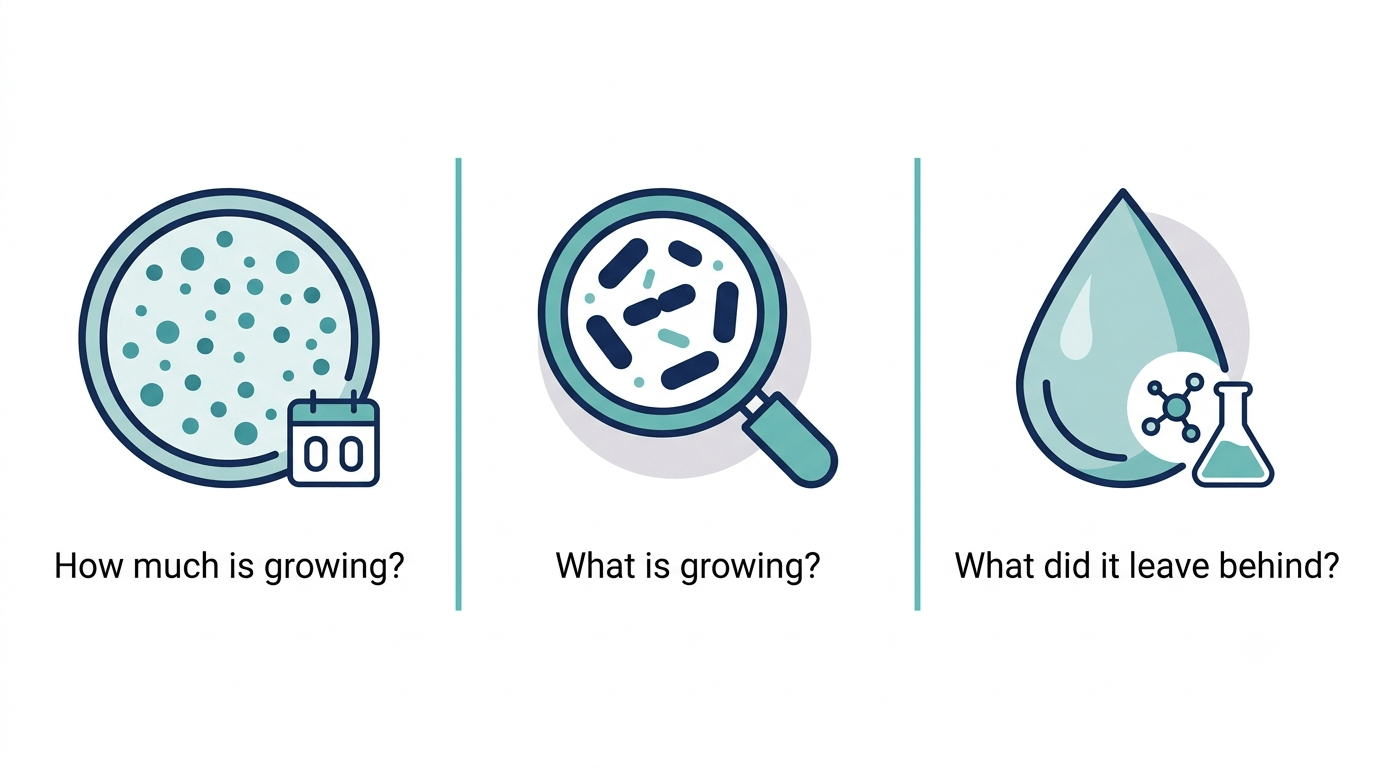
Together these answer three different questions: How much is growing? What is growing? And what has it left behind?
Frequently asked questions
Does USP require pathogen testing for Purified Water?
The Purified Water requirements focus on total aerobic microbial count rather than a mandatory list of pathogens. Many manufacturers still test for specified microorganisms because a count alone does not show which organisms are present.
What is the difference between total microbial count and specified microorganism testing?
Total microbial count measures how many aerobic organisms are present. Specified microorganism testing checks for particular organisms of concern, such as E. coli or Pseudomonas aeruginosa, regardless of the total number.
Why do endotoxins matter if the water has been sterilized?
Endotoxins come from the cell walls of gram-negative bacteria, are released when the bacteria die, and are heat stable. Sterilization can therefore remove the living organism while leaving the endotoxin in the water.
Which microorganisms are commonly screened for in Purified Water?
Common specified organisms include E. coli, Pseudomonas, Salmonella, Burkholderia cepacia and Staphylococcus.
Does Schedule M say anything about the water used in manufacturing?
Yes. Schedule M expects a validated water system that produces water meeting Indian Pharmacopoeia specifications and free from harmful microorganisms. Check the current revised text for exact wording.
The takeaway
So the next time someone says, “USP/EP/JP doesn’t mandate it, so why bother?”, you have the answer: because science, patients and regulations demand more than the minimum.
At Prewel Labs, we often see manufacturers struggling to balance pharmacopeial compliance with real-world safety. Our water testing services cover Total Aerobic Microbial Count, Specified Microorganisms (E. coli, Pseudomonas, Salmonella, Burkholderia cepacia and Staphylococcus) and Endotoxin Testing, so you don’t just meet the baseline, you actually protect patients.