













Why Water for Injection Must Be Pyrogen Free
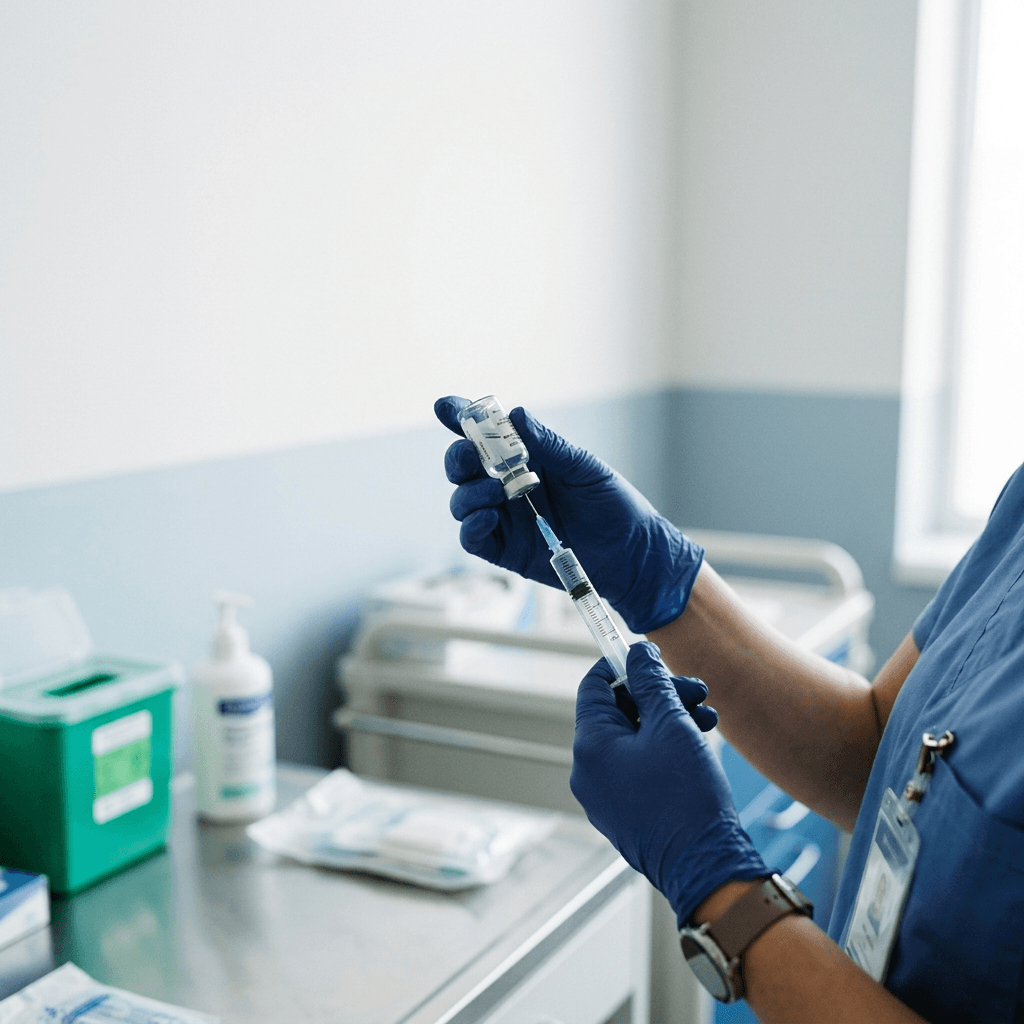
A patient lies on a hospital bed. A nurse prepares an injection. Everything about the moment looks clean, controlled, and routine. But there’s a question worth asking: what’s actually inside that injection besides the drug?
The answer, in almost every case, is water specifically, Water for Injection (WFI). And the standard that water has to meet isn’t just “sterile.” It has to be pyrogen-free. Those are two different things, and the gap between them is where a lot of pharmaceutical quality risk actually lives.
What Pyrogens Actually Are
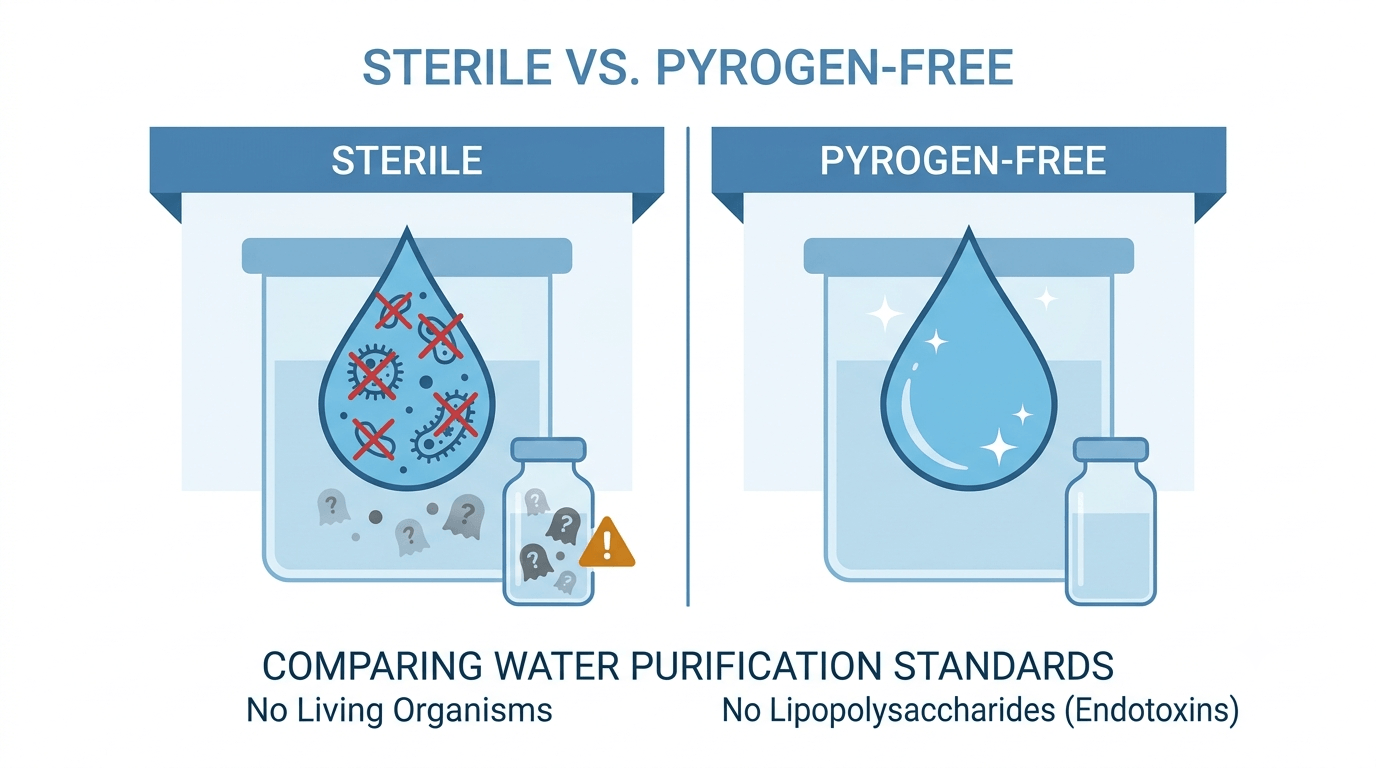
Pyrogens are fever-causing substances, and the ones pharma manufacturers worry about most are bacterial endotoxins fragments of the outer cell wall of Gram-negative bacteria, chemically known as lipopolysaccharides (LPS). The unsettling part is that endotoxins don’t require a living bacterium to cause harm. Even after the bacteria are dead, these fragments remain intact and biologically active, capable of triggering fever, chills, or in more severe cases, septic shock when they enter the bloodstream.
Sterile Doesn’t Mean Pyrogen-Free
It’s a natural assumption: if a product is sterilized, isn’t it automatically safe? Not necessarily. Standard sterilization methods steam autoclaving, for instance are built to kill living microorganisms. They are not built to destroy endotoxins, which are notably heat-stable and chemically tough to break down. A batch can pass a sterility test with zero viable bacteria and still carry a dangerous endotoxin load left behind by bacteria that died earlier in the process.
Destroying endotoxin actually requires far more extreme conditions than routine sterilization provides dry heat depyrogenation typically runs at 250°C for 30 minutes or longer, a completely different process from standard autoclaving. That’s a meaningful gap between “we killed the bacteria” and “we removed what the bacteria left behind.”
Why This Matters More for Injections Than Almost Anything Else
Oral or topical products have the benefit of the body’s natural defense barriers skin, digestive enzymes, stomach acid standing between a contaminant and the bloodstream. Injectable products bypass all of that by design. There’s no second filter, no natural checkpoint. Whatever is in the water goes directly into circulation, which is exactly why even a small endotoxin level in WFI is treated as a real patient safety risk rather than a theoretical one.
The Manufacturing Side: One Contaminated Batch, System-Wide Risk
WFI isn’t only used as an ingredient. It’s used to clean equipment, prepare sterile drug solutions, and reconstitute lyophilized (freeze-dried) powders before administration. If that water carries endotoxin, the contamination doesn’t stay contained to one step endotoxins readily adhere to surfaces like glass and stainless steel, meaning contaminated water used in cleaning or rinsing can leave residual endotoxin behind for the next batch that touches that equipment.
It’s the pharmaceutical equivalent of washing a glass with dirty water: the glass might look clean, but that doesn’t mean it is.
Read More: Why Is BET Incubated at 37°C for 60 Minutes?
How Regulators Set the Bar
Because of this risk, agencies like the U.S. FDA and pharmacopeial standards such as the USP set explicit endotoxin limits for WFI commonly cited at 0.25 EU/mL. These aren’t abstract numbers: failing to meet them during inspection or batch release can trigger recalls, FDA warning letters, and lasting damage to a manufacturer’s regulatory standing.
The FDA has also been direct about the practical reality here: since endotoxins are difficult to remove once present in a product, the more reliable strategy is preventing contamination in the first place rather than trying to purify it out afterward.
How WFI Is Actually Kept Pyrogen-Free
The accepted production methods for WFI are distillation and reverse osmosis (RO) both of which physically separate endotoxin from water rather than chemically destroying it, which is why the equipment itself has to be periodically sterilized to prevent residual endotoxin buildup on system surfaces over time. Ongoing endotoxin monitoring, alongside these purification methods, is what keeps a WFI system within spec on a continuous basis rather than just at initial qualification.
This is the kind of testing and validation work that determines whether a water system is actually holding its limits not just on the day it was installed, but every day it’s in use.
FAQ
What’s the difference between a pyrogen and an endotoxin?
All endotoxins are pyrogens, but not all pyrogens are endotoxins. In pharmaceutical manufacturing, though, bacterial endotoxin is by far the most common and most tested-for pyrogen, since non-endotoxin pyrogens are rarely encountered in this setting.
Can autoclaving remove endotoxins from Water for Injection?
No. Standard steam sterilization (autoclaving) kills living microorganisms but does not destroy endotoxins, which are heat-stable. Removing or destroying endotoxin requires different methods, such as distillation, reverse osmosis, ultrafiltration, or high-temperature dry heat for equipment surfaces.
What is the endotoxin limit for Water for Injection?
The commonly cited USP limit is 0.25 EU/mL, though permissible levels can also be assessed on a dose basis depending on the specific application.
Why can’t endotoxin just be filtered out with a standard sterilizing filter?
Standard 0.22 µm sterilizing-grade filters are designed to remove bacteria and other microorganisms, not the much smaller endotoxin molecules, so filtration alone does not reliably reduce endotoxin levels.
How is WFI tested for endotoxin?
The Bacterial Endotoxins Test (BET), using Limulus Amebocyte Lysate (LAL) reagent, is the standard method used to detect and quantify endotoxin levels in WFI and other pharmaceutical water systems.
At Prewel Labs, testing for endotoxins and validating WFI systems isn’t just a service it’s about protecting every dose that reaches a patient. Because in pharma, purity isn’t a feature. It’s a responsibility.